Low Calorie Bread

This post may contain affiliate links. See my disclosure policy.
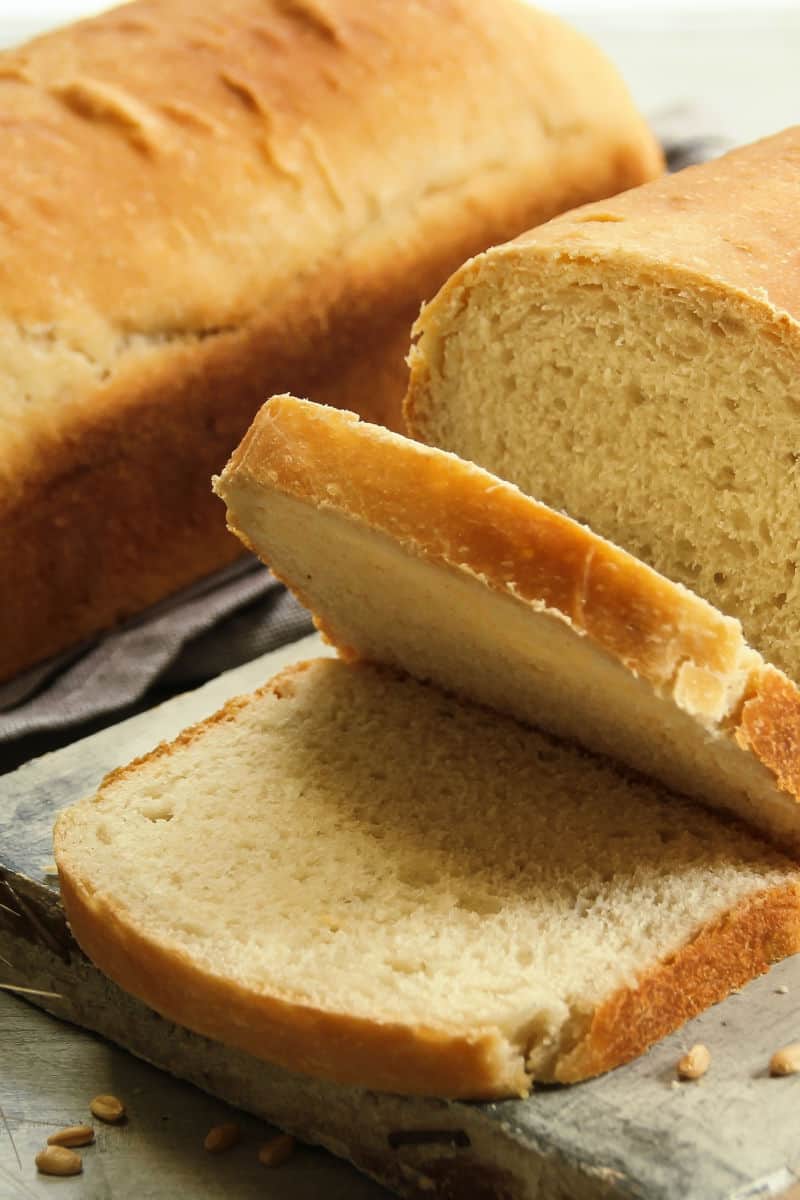
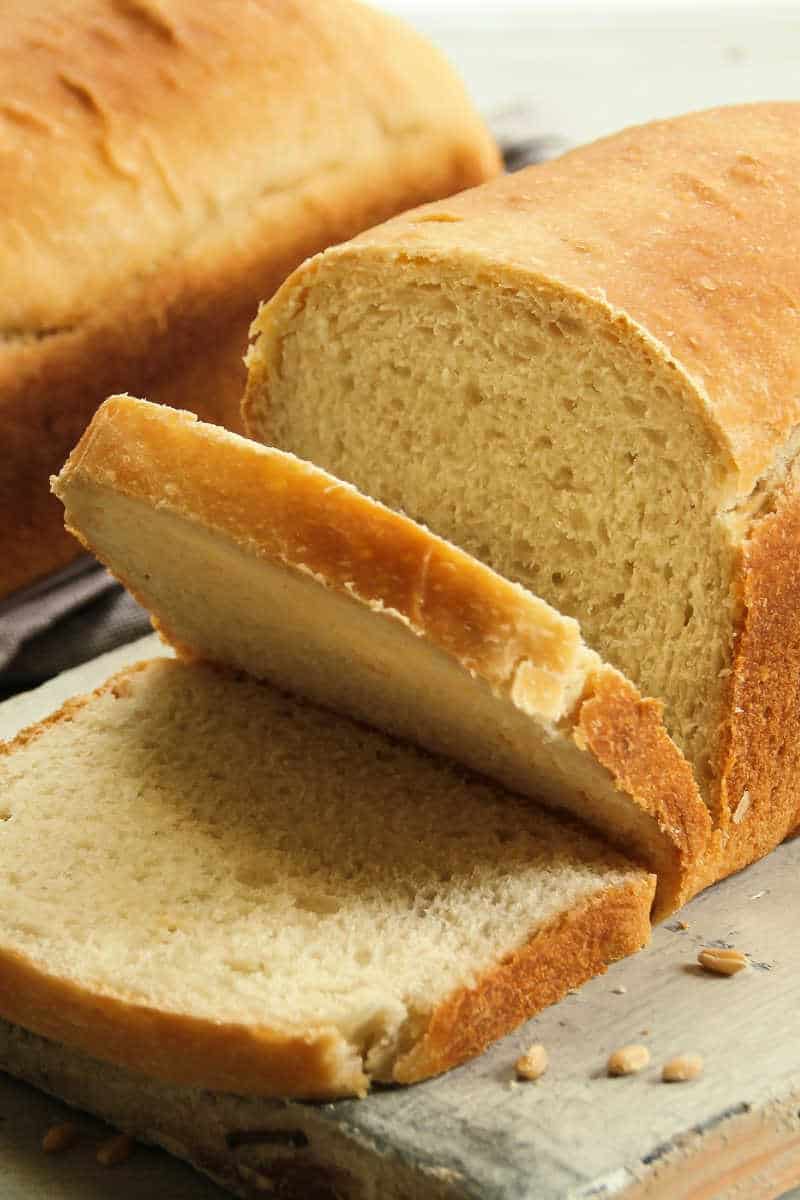
This low calorie bread recipe is soft and fluffy inside with a tender, sliceable crumb. It’s perfect for toast, sandwiches, and more.
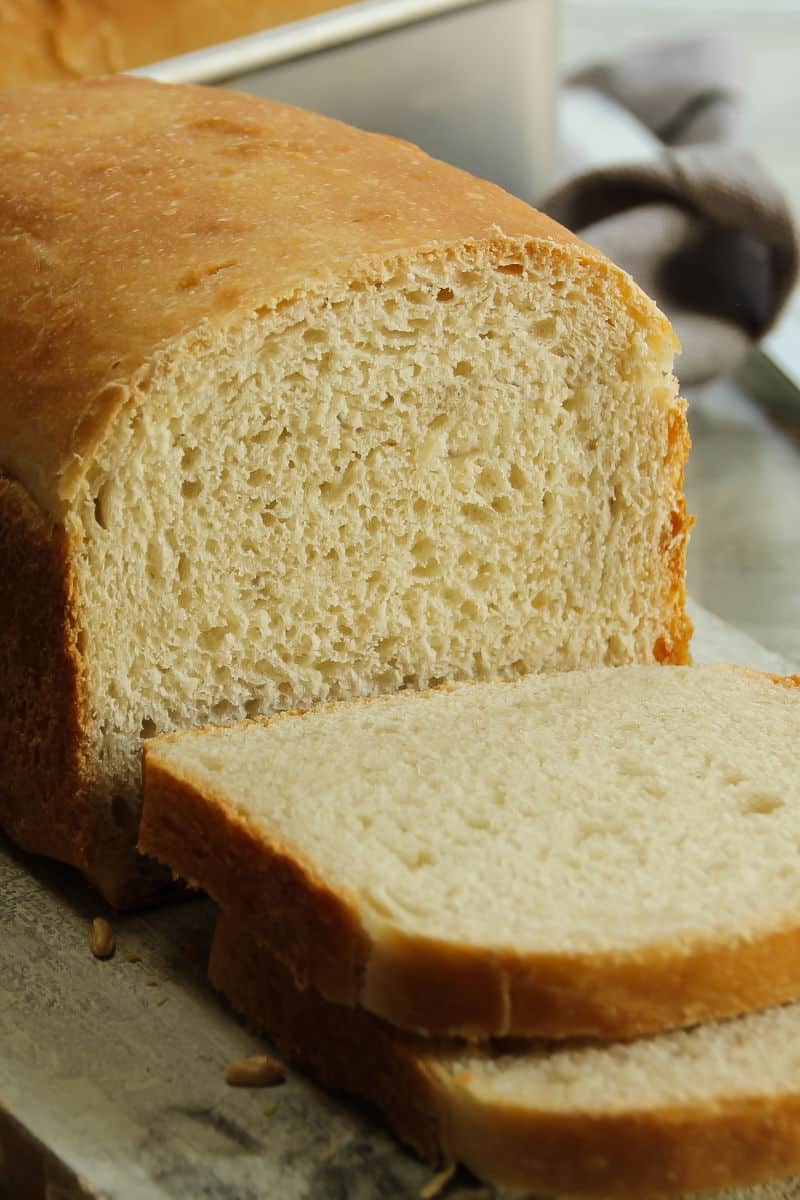
Why this low calorie bread recipe works

Bread is one of those foods that’s surprisingly hard to ‘lighten up’ without ruining the texture. The first time I tried to reduce the flour, I ended up with a dense, heavy loaf. Cutting back on the fat didn’t help either. It just made the bread dry and crumbly.
After testing multiple variations in my kitchen, I went back to basics and loosely adapted my mom’s whole-wheat bread recipe. From there, I made small, intentional tweaks to lower the overall calorie density while keeping the loaf soft, sliceable, and sturdy enough for sandwiches.
My recipe yields two loaves, each with about 20 thin sandwich slices. When sliced evenly, each piece stays moderate in calories while still feeling substantial.
Key Ingredients
Here’s what goes into my low cal bread, along with kitchen notes. Full measurements are in the recipe card below.
- Flour. I used whole wheat flour, as it pairs well with the wheat germ and has a lovely flavor when toasted. White all-purpose flour can also be used.
- Bread flour. Provides structure and strength to the dough. It also helps the loaf rise properly and maintain a soft crumb.
- Wheat germ. Adds a subtle nutty flavor and extra fiber, while contributing to the bread’s overall structure .
- Salt. Enhances flavor and strengthens the dough structure.
- Sugar. Provides mild sweetness and helps activate the yeast for a proper rise.
- Olive oil. You need some fat to give the bread some richness and a golden crust.
- Yeast and warm water. The water should be around 43C/110F in temperature.
- Yogurt. Plain yogurt is preferred, but Greek or natural yogurt can also be used. Your yogurt must be room temperature, not chilled.
How to make low calorie bread
In a small bowl, combine the flour, wheat germ, salt, and sugar. In a large, separate bowl, add your warm water and yeast and let it dissolve. Add the small bowl of dry ingredients, along with the oil and yogurt, and whisk together until combined. Slowly add the bread flour until a firm dough remains.
Next, lightly flour a kitchen surface and transfer the dough to it. Gently knead the dough for 5-6 minutes, until smooth. Lightly grease two large mixing bowls and divide the dough into two equal portions. Place each portion of dough into the bowls and roll it around to lightly coat the exterior in oil. Cover each bowl of dough and let it rise in a warm area for an hour, to rise.
Now, remove the dough from the bowls and once again, place it back onto a floured surface. Shape each portion of dough into a loaf and place it in a lightly greased 9 x 5-inch loaf pan. Cover each loaf and let it rise until doubled, about 30 minutes.
Finally, preheat the oven to 185C/375F. Place the loaves in the oven and bake for 35-40 minutes, or until golden brown on top. Remove the loaves from the oven and let them cool in the pan for 10 minutes, then carefully transfer them to a wire rack to cool completely. If desired, lightly brush the top with melted butter or olive oil.
Troubleshooting and frequently asked questions
Yes, I recently (Feb 2026) tested this in a bread machine, but there are a few changes. Add the wet ingredients first, then the dry ingredients, and add the yeast at the very end. Use either the whole wheat or basic sandwich bread setting and allow the full knead-rise-bake cycle to complete (very important). Slice only after the loaf has cooled completely.
My recipe keeps calories modest by using minimal added fat and sugar, and producing consistent, thin slices. Traditional homemade loaves are often sliced thicker (as toast slices), which naturally increases the calories per serving, even with identical ingredients. Also, most standard sandwich breads contain 70-110 calories per slice.
The most common causes are inactive yeast or water that isn’t the right temperature. Also, your dough should not be too dry. If it isn’t soft and slightly tacky, add tablespoons of warm water (one at a time) to adjust the texture.
Since retesting the recipe, each slice is about 54 calories (based on a 20-slice loaf). If you want slightly thicker slices, slice each loaf into 16 slices, each with about 68 calories.
Storage instructions
To store: Once sliced, the low calorie bread can be stored in a sealed paper bag or bread box. They will keep fresh for up to 3 days. If you’d like to keep the bread longer, you can store it in the refrigerator for up to 1 week.
To freeze: Place leftover bread in ziplock bags and store them in the freezer for up to 6 months.
Low Calorie Bread
Ingredients
- 3 cups white whole wheat flour 360g, or whole wheat flour
- 1 cup bread flour 120g
- 1/2 cup wheat germ 60g, toasted
- 1 1/2 teaspoons salt 9g
- 1 tablespoon sugar 12g
- 2 1/4 teaspoons active dry yeast 7g
- 1 1/2 cups warm water 360ml, 45C/113F
- 3/4 cup plain yogurt 180g, room temperature
- 1 tablespoon olive oil 15ml
Instructions
- In a small bowl, add the white whole wheat flour, wheat germ, salt, and sugar, and mix until combined. In a large mixing bowl, add the yeast and warm water and let it dissolve. Add the bowl of mixed dry ingredients, along with the oil and yogurt, and whisk until combined. Gently fold through the bread flour until a firm dough remains.
- Transfer the dough onto a lightly floured surface and gently knead the dough until smooth and elastic. Lightly grease two mixing bowls. Divide the dough into two portions and place each ball of dough into the greased bowls, and roll around, until the exterior is covered in some of the oil. Cover each bowl of dough and let it sit in a warm area for around an hour, to double in size and rise.
- Grease two 9 x 5-inch loaf pans and set them aside. Remove the balls of dough and place them once more on a floured surface. Shape each ball of dough into a loaf shape and place them into the greased loaf pan. Cover the pans and let them rise until around double in size, approximately 30 minutes.
- Preheat the oven to 185C/375F. Place the loaves in the oven and bake for 35-40 minutes, or until golden brown on the outside. Remove the loaves from the oven and let them cool in the pan for 10 minutes, before carefully transfer them onto a wire rack to cool completely. If desired, brush the crust with butter or olive oil.
Notes
- Nutritional information and serving size: This recipe. makes two loaves of bread, and each loaf produces 20 thin slices, about half an inch in thickness, and 0.9 ounces (25g).
- For a slightly higher calorie count (68 calories), slice each loaf into 16 slices. Each slice would be 3/4 of an inch thick and 1.1 ounces (31g).
- Leftovers: Keep in sealed paper bags for 3 days or in the fridge for one week. Freeze loaves in the freezer for up to 6 months.
Nutrition
More low calorie recipes
- Low calorie ice cream– A creamy frozen dessert with just two ingredients.
- Low calorie candy– Chewy, soft, and tastes like gummy bears.
- Low calorie cookies– Soft, chewy, and a decent size!
- Low calorie peanut butter– Enjoy all the peanut butter flavor.
- Low calorie pancakes– These are so thick and fluffy.
Originally published July 2021. Updated February 2026 to improve measurement accuracy, retested dough, and provided revised nutrition estimates.















Anybody try with all purpose flour instead of bread flour? Would it work? Or would it alter the calories/ integrity of the bread
Can I use rapid yeast instead? And what can I use in place of the wheat germ?
Completely new to bread making and I will be using my kitchenaid but am excited to try this!
Rapid yeast should be fine! I suggest picking up some wheat germ before making this bread- it makes all the difference. If not, equal amounts of wholewheat flour.
Hi, I am on a very low sodium diet could i half the sodium in the recipe (or omit) without messing up the bread. Ty
That’s perfectly fine! You could drop it down to a 1/2 teaspoon if you prefer. If you decide to completely omit it, there shouldn’t be a huge difference in the cake’s texture either.
Can this recipe be made in a bread machine? Also, what size are the loaves? Typical recipes that I’ve seen yield a 1.5lb loaf.
Hi JT, this can be made in a bread machine! The loaf should be between 1.5 and 2 lbs. Hope this helps!
Can’t wait to try this!
Is the yogurt Whole Milk, Non Fat, or Low Fat?
Any work 🙂
Hi, is it possible to make one large loaf instead of two smaller ones? Many thanks.
Hi Babz, you definitely can, you might just need to bake it slightly longer to make sure the middle is done!
Hello Arman,
I plan to substitute milk for the yoghurt. How would you suggest I go about it to get the most similar results to the original recipe? Thank you.
Not sure- I’ve only tried it as written, so you’ll need to experiment and see
I made this yesterday and the flavor is good. But mine caved in— I shouldn’t be surprised because everything I try to bake using fat free yogurt falls flat. 😫. I just don’t have good luck using yogurt in baked goods.
This was okay, but I like really thick slices of bread which doubles the calories.
Hi Nancy! I hear you- my recipe is similar to most low calorie breads out there, which are not large and thick like a sourdough or seeded bread.
This recipe was perfect! I divided the dough into 4 mini loaf pans. I used an egg white and water wash and topped the breads with oats and sesame seeds. My family loves this recipe! Thank you! 🤗❤
Has anyone used a bread machine for this recipe from start to finish? Could you give me a procedure? Thank you
Hi Dana- yes, it’s in the FAQs. Hope that helps!
Just bought a Cuisinart Bread Maker, Up To 2lb Loaf, New Compact Automatic.
Do you think I can make this low calorie bread in that machine?
Yes, Nancy, you can. I’ve recently updated it to include how I used a bread machine- Add the wet ingredients first, then the dry ingredients, and add the yeast at the very end. Use either the whole wheat or basic sandwich bread setting and allow the full knead-rise-bake cycle to complete (very important). Slice only after the loaf has cooled completely.
I’m really looking forward to trying this recipe. Will it matter if I leave out the sugar or use a sugar substitute like a monk fruit sweetener?
I love your website. So much variety, everything is so easy to make and everything I’ve made so far has been delicious. You are my go-to baker 🙂
I think omitting it should be okay 🙂
Hi Arman, this bread looks great! I’m currently on WW. Any idea how many points per slice? The sugars aren’t listed. Thanks!
Hi Jen! I’m not familiar with WW points so I’m not sure sorry!
can this recipe be made in a bread machine? If so, are the exact amount of ingredients used?
Hi Mary- yes, I’ve updated this post to include the bread making option- Add the wet ingredients first, then the dry ingredients, and add the yeast at the very end. Use either the whole wheat or basic sandwich bread setting and allow the full knead-rise-bake cycle to complete (very important). Slice only after the loaf has cooled completely.
Thanks for the feedback Brenda!
Hi Carol, I used my kitchenaid to mix/knead the dough too, but mine has come out fluffy and perfect each time. I’m pretty new to bread making, so I’m pretty pleased with the results.