How To Cook Couscous

This post may contain affiliate links. See my disclosure policy.
Learn how to cook couscous perfectly with my easy-to-memorize recipe! In just 20 minutes, you’ll have fluffy, colorful, perfectly seasoned couscous. It’s my family’s favorite side dish!
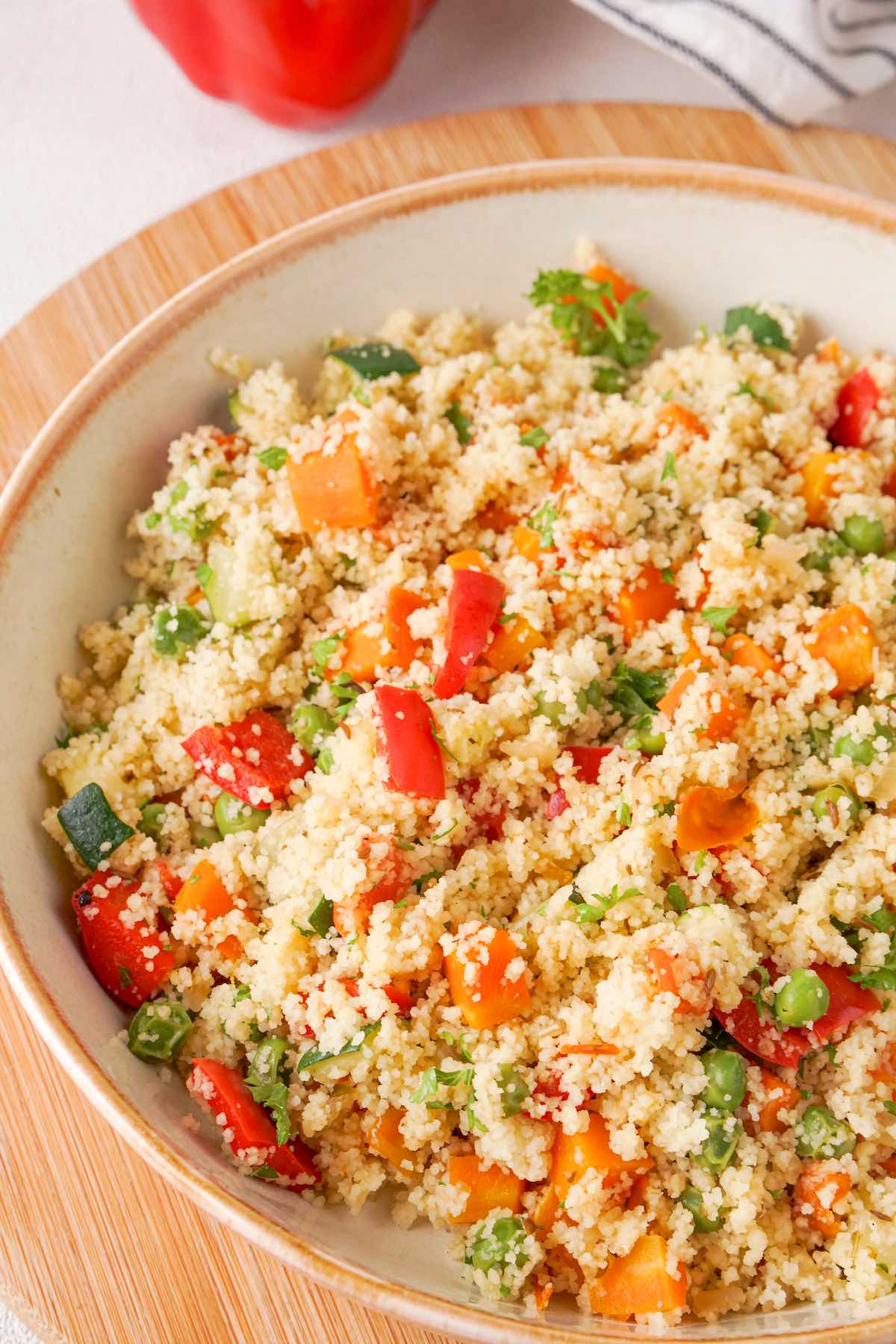
We’ve been adding couscous to our weekly dinner roster for years, and I for one think it’s the most versatile and underrated grain there is.
As a culinary school graduate, couscous was one of the first grains I was taught to cook properly (after basmati rice), and the number one mistake I see is people treating it like rice and boiling it too long. The trick is the resting, not the cooking, which I’ll show you below.
Its mild flavor acts as a blank canvas that you can season however you want. Its soft, chewy texture makes it interchangeable with rice or pasta, and it pairs well with all sorts of veggies and proteins.
What is couscous?
Couscous is a small wheat-based, granular type of pasta that’s popular in Mediterranean cooking. It’s typically made from durum wheat and semolina flours. The most common variety is Moroccan couscous, but you may also find Israeli couscous, which has a slightly larger pearl shape.
Table of Contents
Why I love this recipe
- It’s quicker than rice. Couscous absorbs liquid in under 10 minutes, which makes it my go-to when I need a filling side dish on a weeknight.
- Light and healthy. At around 175 calories per serving with 7 grams of protein and 3 grams of fiber, it’s one of the most nutritious grains you can add to your rotation.
- Cooked in stock, not water. Most packages instruct you to use water, but I always use chicken or veggie stock instead. It’s the single biggest upgrade you can make. The couscous absorbs all the flavor as it rests, so every grain I seasoned from the inside rather than just the surface.
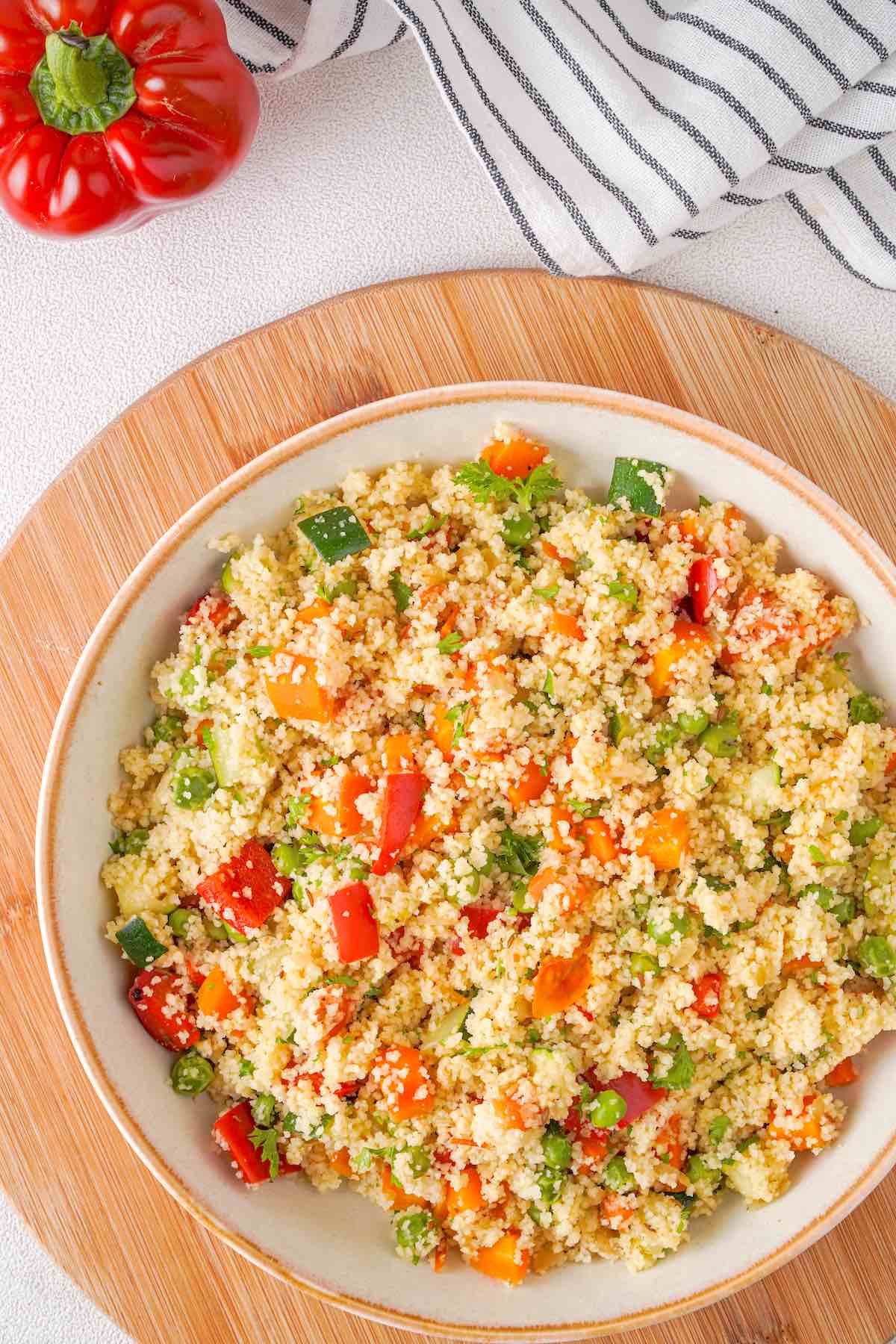
Ingredients needed
- Couscous. I used pearl couscous, which is the most common variety in mainstream grocery stores. If a recipe just says “couscous,” this is what they mean. It’s larger and chewier than Moroccan couscous, which is much finer.
- Stock. I strongly prefer chicken stock over water here- it seasons the couscous from the inside as it absorbs. Other stocks (like vegetable or beef) are fine to use.
- Spices. I use cayenne pepper, smoked paprika, saffron, garlic powder, and onion powder. Saffron is optional, but it adds a beautiful golden color and a subtle floral flavor. A pinch goes a long way.
- Vegetables. Use the diced vegetables of your choice. I like to add carrots, bell peppers, zucchini, and peas, and I’ll stir in spinach right before serving.
- Extra virgin olive oil. For flavor and texture.
- Salt. To taste.
- Butter. I use unsalted butter while fluffing the couscous to help create a smoother texture, but you could use more EVOO. Don’t skip the fat entirely- it’s what gives each grain the glossy, separate texture.
How to cook couscous
I’ve included step-by-step photos below to make this recipe easy to follow at home. For the full printable recipe instructions and ingredient quantities, scroll to the recipe card at the bottom of this post.
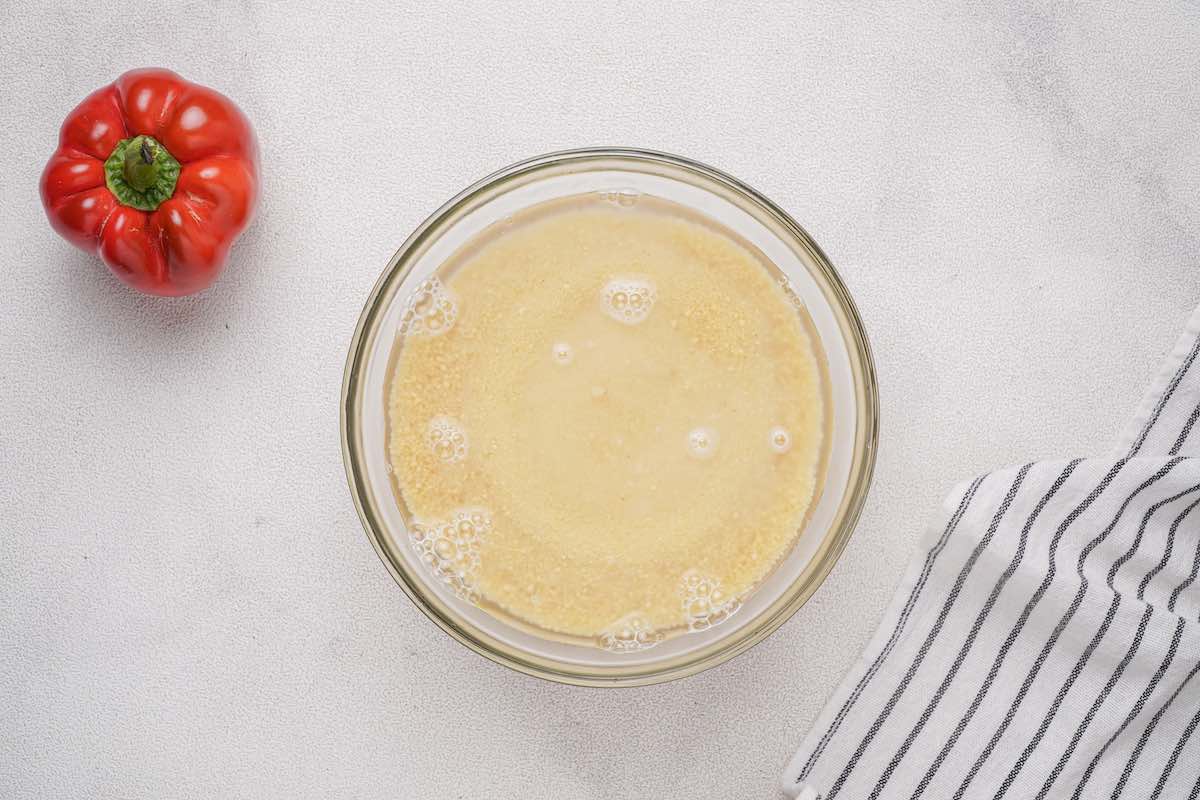
Step 1- Cook the couscous. Bring the broth to a boil, reduce to a simmer, and add oil and salt. Add the couscous, cook briefly, remove it from the heat, and set it aside until most of the liquid is absorbed.
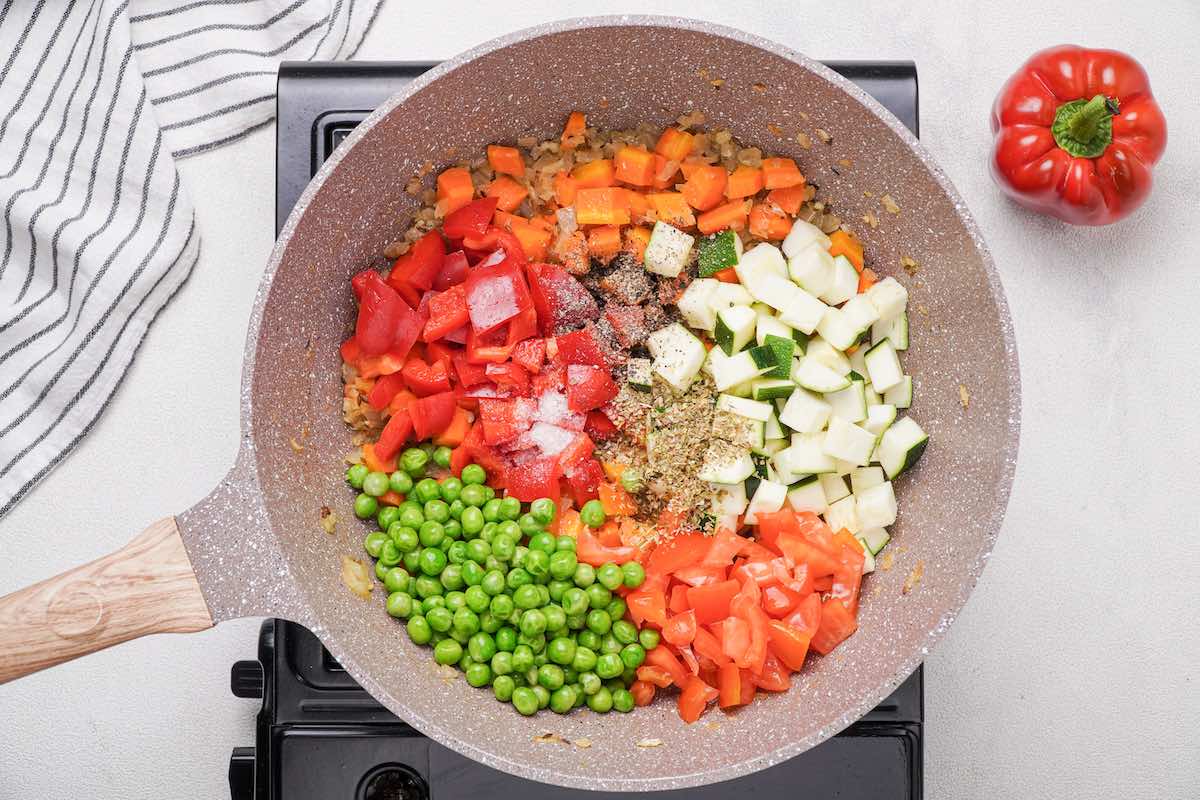
Step 2- Sauté veggies. Add the veggies to an oiled skillet and cook until tender.
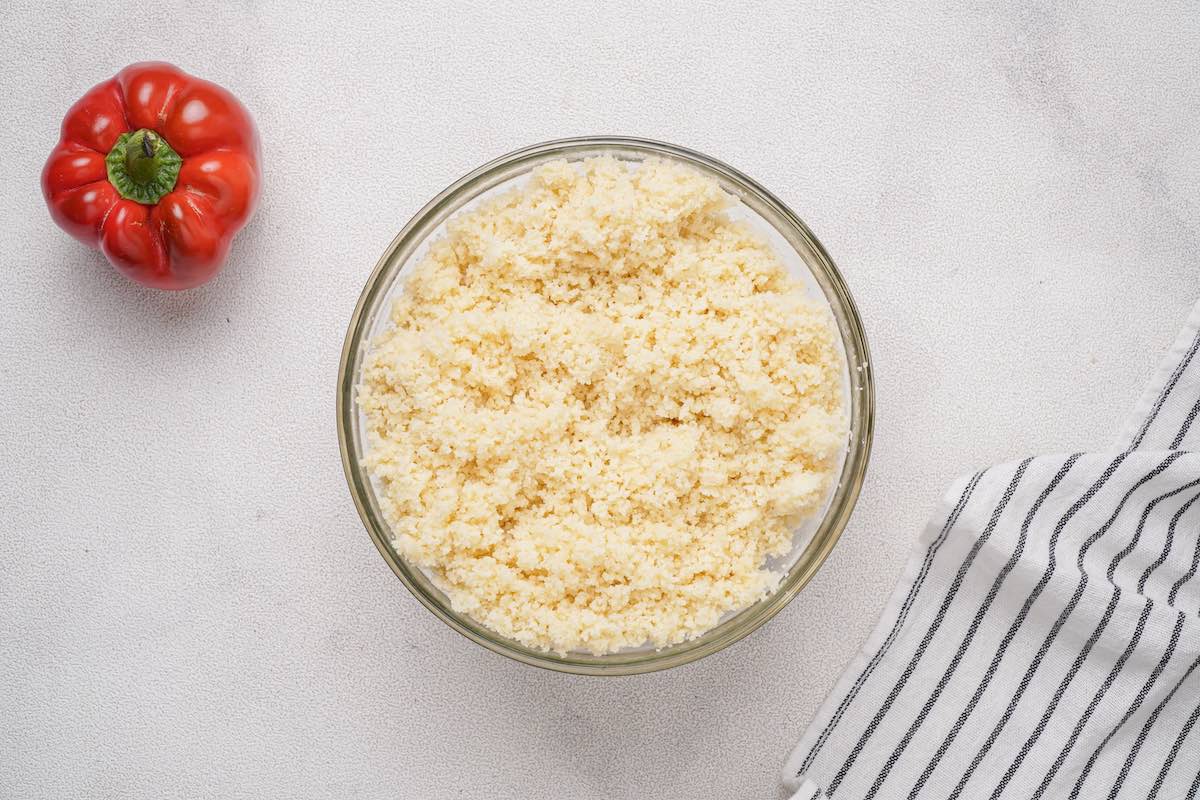
Step 3- Season. Fluff the couscous with a fork and add the seasonings. Stir in the butter.
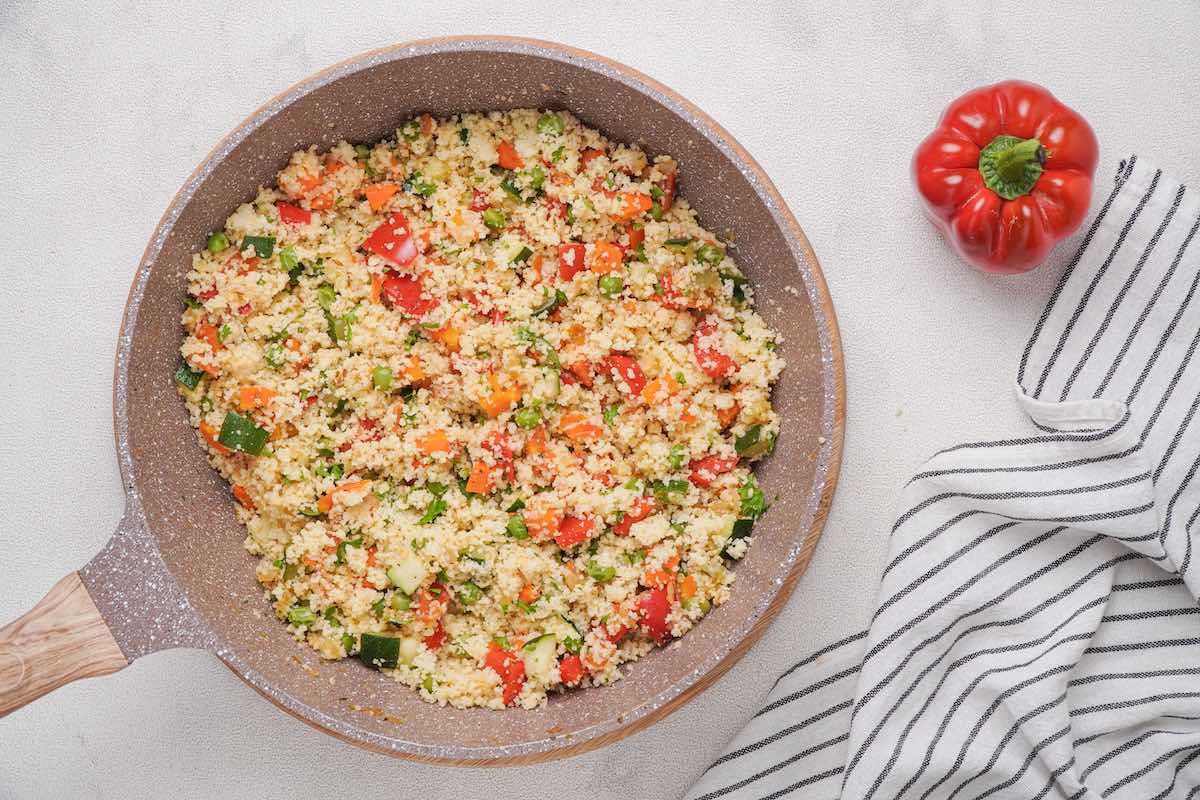
Step 4- Assemble. Add the couscous to the skillet and stir to combine.
Can I make couscous in the microwave?
Yes, if you’re really pressed for time, you can use the microwave instead of the stovetop.
To do this, microwave the broth until very hot (about 5 minutes), then stir in the oil and salt and carefully pour it over the couscous in a heatproof bowl. Cover it and let it sit for 10 minutes or until the liquid is absorbed.
Arman’s recipe tips
- Toast the couscous. Lightly toast the couscous in a dry skillet for 2-3 minutes. This will give it a slightly nutty flavor. I do this every single time now, and it makes a noticeable difference.
- Maintain the 1:1 liquid ratio. Use 1 cup of water or stock for every cup of couscous; this will ensure a consistent texture if you need to scale the recipe up or down.
- Leave it alone! Once you remove it from the heat, leave it covered until all liquid has been absorbed. This means no stirring–and no peeking!
Variations
- Crunch. Top the couscous with toasted pine nuts or pistachios. I always finish mine with toasted pine nuts- I toast them dry in the skillet I used for the couscous, so there’s one less pan to wash.
- Fresh herbs or citrus. Garnish the couscous with parsley, mint, cilantro, or fresh basil, and a touch of lemon. I prefer parsley and a squeeze of lemon- it cuts through the butter and brightens the whole dish.
- Dried fruit. My partner loves folding in dried apricots when I serve this alongside Moroccan chicken. The sweetness works really well against the smoked paprika. Raisins and cranberries are also great additions.
Storage instructions
To store: Store the cooled couscous in an airtight container in the refrigerator for 3-4 days.
To freeze: Let the couscous cool completely, then freeze it in a freezer-safe container for up to 3 months.
Reheating: Reheat the couscous in a pot with a splash of water or stock and cook on medium-low heat until warm. Or, microwave the couscous with a tablespoon of water until warm.
Frequently asked questions
I prefer the stovetop method with stock for better flavor, but in a pinch, this works fine. Pour boiling water over couscous, cover it with foil, and let it sit until the liquid is fully absorbed.
One dry cup of couscous should yield 2-3 cups of cooked couscous, depending on the type you’re using and the amount of liquid you add.
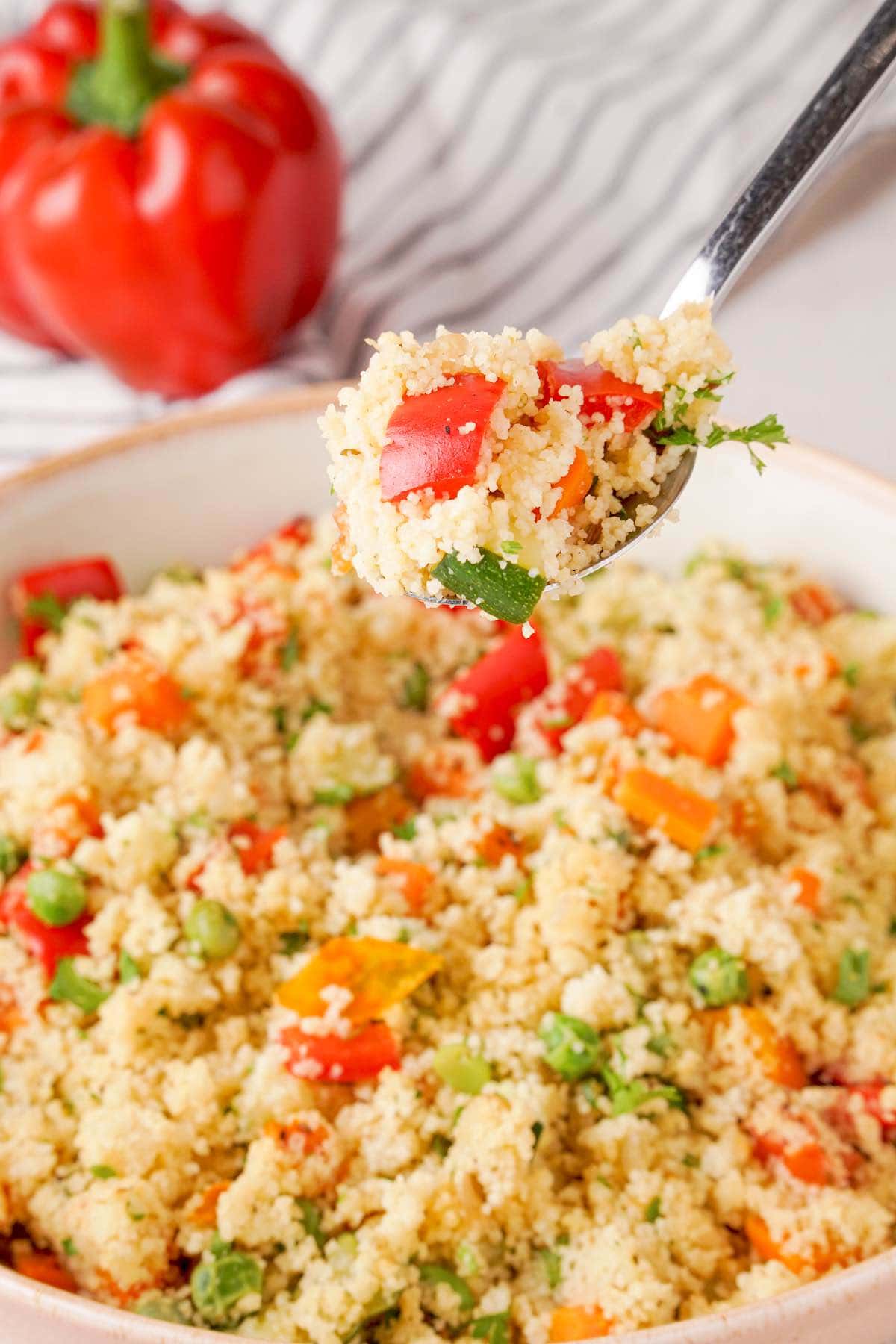
The most common culprits are too much liquid or not enough rest time. I learned through testing that the 1:1 ratio is non-negotiable. Any more liquid and the couscous becomes waterlogged (thick) rather than light. The second issue is lifting the lid too early. I always wait a full 5-6 minutes before touching it, then fluff immediately with a fork rather than a spoon. A spoon compresses the grains, which is what gives you that dense, clumpy texture instead of a fluffy one.
How To Cook Couscous
Video
Ingredients
- 1 1/2 cups couscous
- 3 cups chicken broth
- 1 teaspoon olive oil
- 1/2 teaspoon sea salt
- 1 teaspoon cayenne pepper
- 1 teaspoon smoked paprika
- 1 teaspoon garlic powder
- 1 teaspoon onion powder
- 1 teaspoon saffron
- 2 tablespoon unsalted butter can sub for olive oil or oil of choice
- 1 cup mixed vegetables i used zucchini, bell pepper, carrots, and peas
Instructions
- In a large pot, add the chicken broth and place over medium heat. Bring it to the boil.
- Once boiling, reduce to a simmer, add the olive oil and salt, and mix well. Add the dry couscous and cook for 1-2 minutes before removing from the heat. Allow the couscous to sit for 5-6 minutes or until most of the liquid has been absorbed.
- While this is happening, saute the vegetables in a skillet until tender.
- After the liquid has been absorbed, fluff the couscous with a fork and add the cayenne pepper, smoked paprika, garlic powder, onion powder, and saffron and mix very well. Stir through the unsalted butter until the couscous is coated.
- Add the couscous to the skillet with the vegetables and mix until combined.
Notes
Nutrition
Recipes to use couscous
Originally updated October 2023















This I really needed in my life! My cous cous is favourite thing and I think I eat it 2-3 times a week. Thannks for the recipe.
You are so welcome, Mario. It’s SUCH a delicious side dish 🙂
Couscous is made from semolina, which is a granule of durum wheat. Therefore, it is not gluten-free. Couscous is commonly mistaken for being gluten-free.
I used to love couscous, then I got diagnosed with coeliac, sad 😔
You are absolutely right- it is something that many people assume to be gluten-free!
We love rice here, especially jasmine rice. We also are couscous eaters and love it too. The type really doesn’t matter to my son, but I’ve found I love the Israeli type. Love those little balls of flavor. I’m not that crazy about the sweet recipes, but all the others…..YUM!
Thanks, Sharon! I love the Israeli type too- Such a delicious nutty texture 🙂
Israeli couscous is very nice: it is so large and I once had a salad with it, a light lemon vinegarette and roasted vegetables. It was delicious.
This looks lovely. I think eggplant strips or pressed tofu that was dry rubbed with spice might work for a veggie option.
Oh wow, LeAnn that sounds delicious- I’m working on an antipasto version!
Eggplant strips and tofu? YES PLEASE.
Dinners that come together this quickly are my absolute favorite. This looks delicious.
Thanks so much, Christine- You and me both!
I bet this dish would be amazing with just about any protein, Arman! It’s so packed with flavor, too. Awesome recipe!
Thanks for your kind words, Becca. I bet this would go well with…I don’t know, some peanut butter DIP 😉
Couscous is one of those grains where whenever I eat it, I wonder why I don’t do it more often. It’s fast, easy, has great flavor and holds up well with other veggies. This sounds fantastic and your pictures came out beautifully.
Thanks my dear 🙂
I love paella and all Spanish food!! This looks yummy!!
I think the grain that was made most often in my household by my mom, was white rice. I have definitely branched out to different types of grains as I have gotten older. I like quinoa a lot because of the nutty taste. It’s so filling, too!
I need to start bringing quinoa back in action! Spanish food (Especially seafood!) is so good!
I’ve ALWAYS wanted to make paella!! ALWAYS – gotta try it with spaghetti squash or cauliflower – ASAPPPPer-rooo!
If you moved to LA….. WE COULD MAKE IT TOGETHER—- HUBBY! lol
YES! I’d totally Gigi this recipe up!
The staple grain in my house was spaghetti or white rice. My mom was a real trailblazer on that front. I think the grain I have learned to appreciate as of late is pearled couscous. It’s like big round balls of pasta. I like the way they feel in my mouth ahaha
I love pearled couscous- So good!
I love couscous but always forget about it! …or maybe I just like saying couscous. Couscous.
Hahahaha just like I love saying Pittsburgh. Pittsburgh.