Smoked Beef Tenderloin

This post may contain affiliate links. See my disclosure policy.
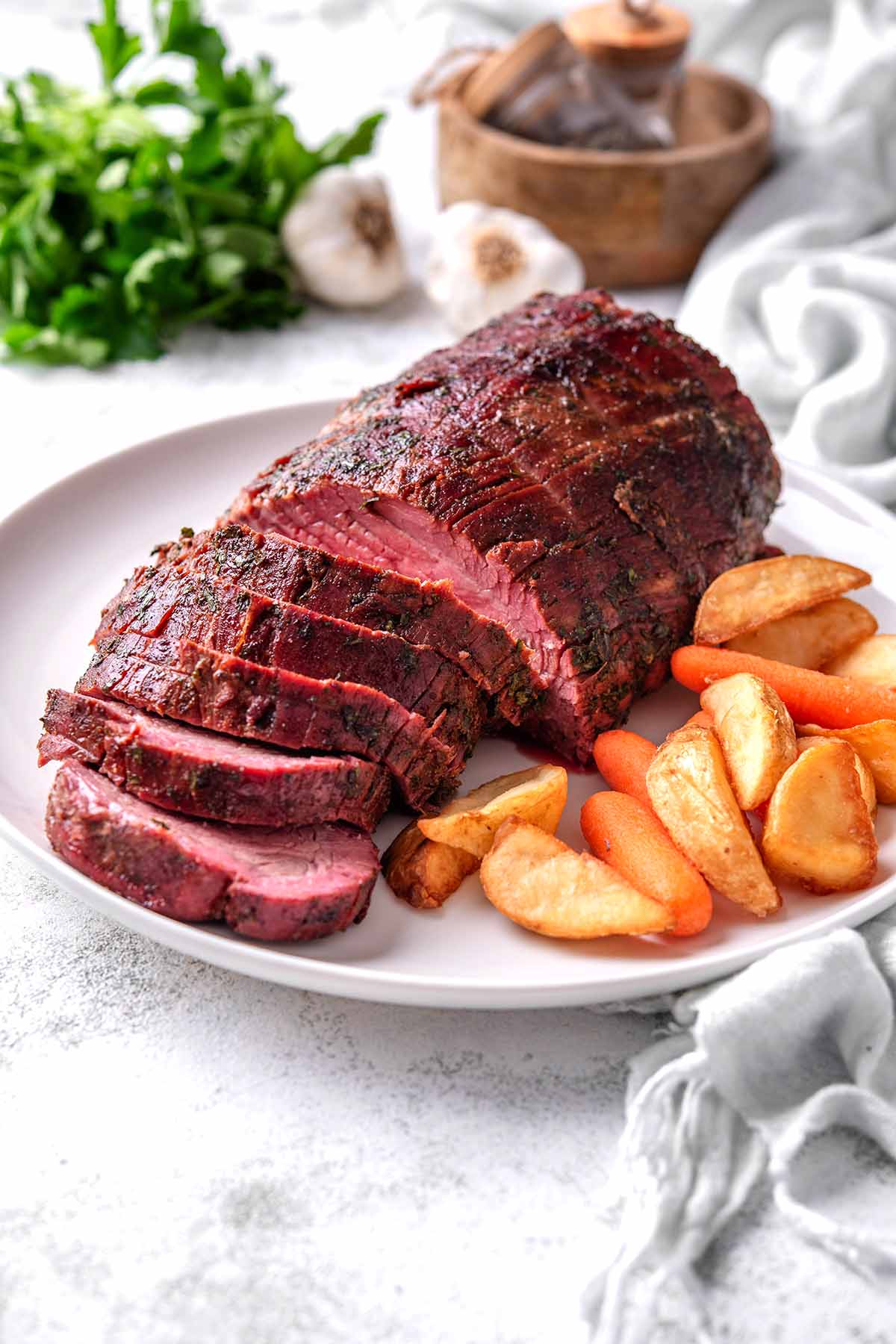
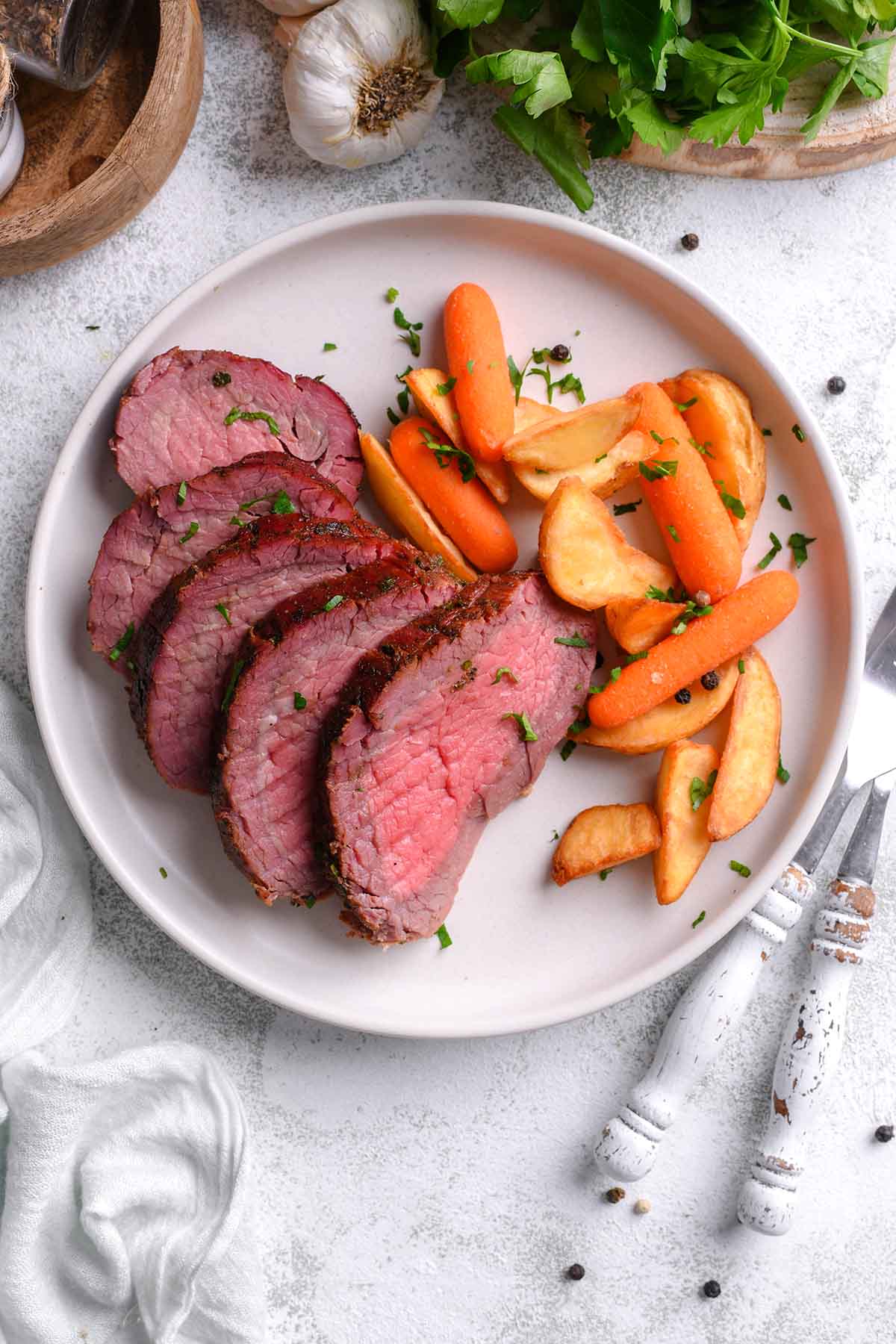
My smoked beef tenderloin recipe is deceptively simple and guarantees juicy, tender beef with a rich smoky flavor and gorgeous crust every time.
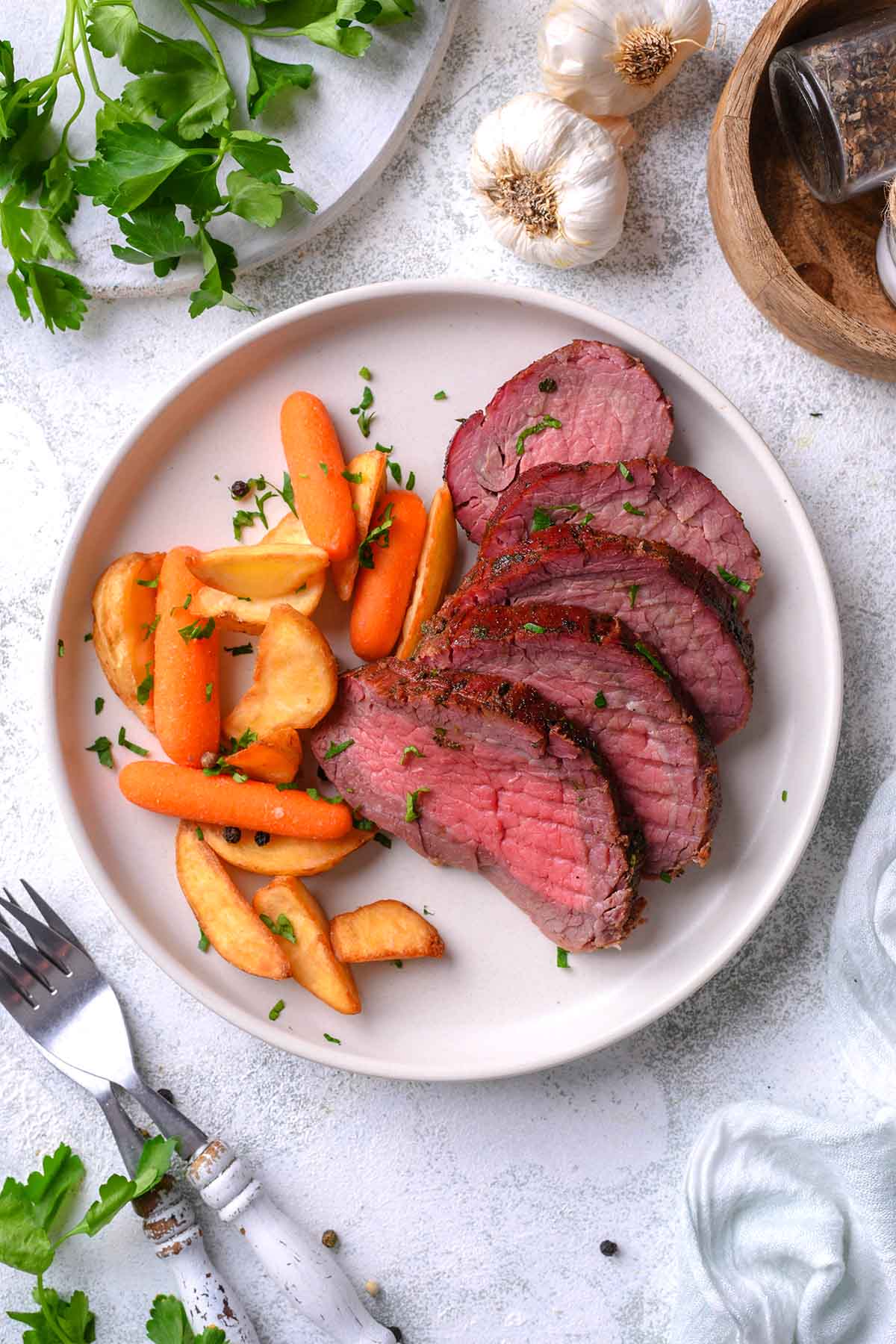
When I first started experimenting with smoker recipes, I kept things simple with proteins like chicken breast or pork belly. I’ve always loved smoked beef tenderloin from pubs and smokehouses, so recreating it at home was high on my list (and my partner’s- it’s his go-to pub order!).
When testing how to smoke a beef tenderloin, I quickly learned that less is more. Because beef tenderloin is naturally lean and tender, it doesn’t benefit from a complicated marinade or heavy seasoning. The biggest challenge is cooking it to the correct temperature, as even a few extra minutes can turn it from juicy and rosy pink to overcooked and dry.
The finishing touch is a reverse sear. Once the tenderloin is done smoking, I transfer it to a searing-hot cast-iron skillet to develop a deeply caramelized crust. It adds an extra layer of flavor while keeping the center buttery-soft and perfectly cooked.
Table of Contents
Arman’s tips before starting
Keep the temperature 250°F. Low-and-slow cooking gives the smoke time to flavor the meat while keeping the tenderloin juicy and evenly cooked.
Don’t skip the sear. Smoking alone won’t give you the gorgeous crust. The reverse sear adds color, texture, and an extra layer of flavor.
Keep the tenderloin tied. I leave the butcher’s twine on while it smokes because it helps the tenderloin maintain an even shape and cook more consistently. Just remove it before searing.
Pull it at 120-125°F. The reverse sear will continue cooking the meat, so I always remove the tenderloin from the smoker before it reaches my target temperature.
Rest before slicing. I find 15 minutes to be the sweet spot. It gives the juices time to redistribute, resulting in a much juicier roast.
Key Ingredients
Here’s what goes into a smoked beef tenderloin, along with my kitchen notes. Full measurements are in the recipe card below.
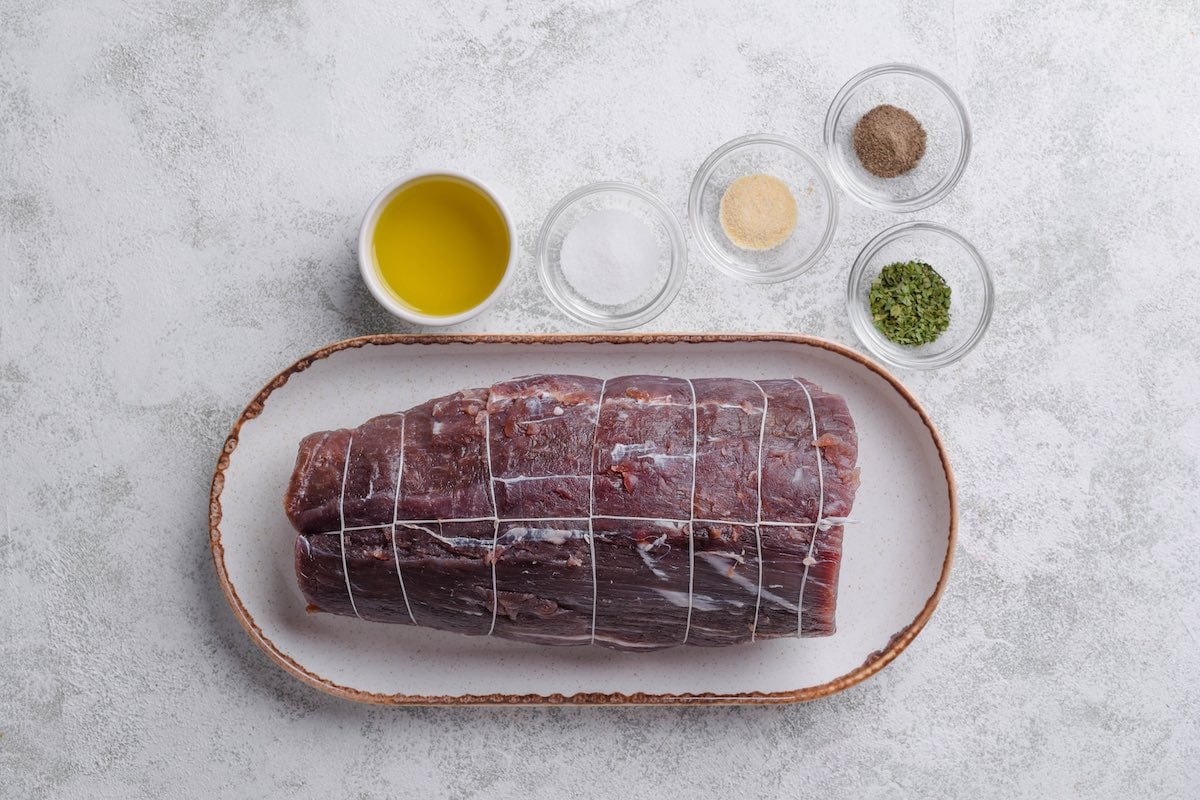
- Beef tenderloin. Look for a tenderloin with good marbling and an even thickness throughout. If yours is tied with butcher’s twine, leave it on during smoking for more even cooking. Also check that any silver skin has been removed, as it doesn’t break down during cooking and can become chewy.
- Olive oil. It’s brushed onto the meat to help the seasonings stick and form a delicious crust.
- Seasonings. I keep it simple with sea salt, black pepper, dried parsley, and garlic powder. Beef tenderloin has plenty of natural flavor, so it doesn’t need an elaborate spice rub.
How to smoke a beef tenderloin
Step 1 – Season the beef. Brush the beef tenderloin with olive oil. Stir the dry seasonings in a small bowl before evenly sprinkling the blend over all sides of the meat.
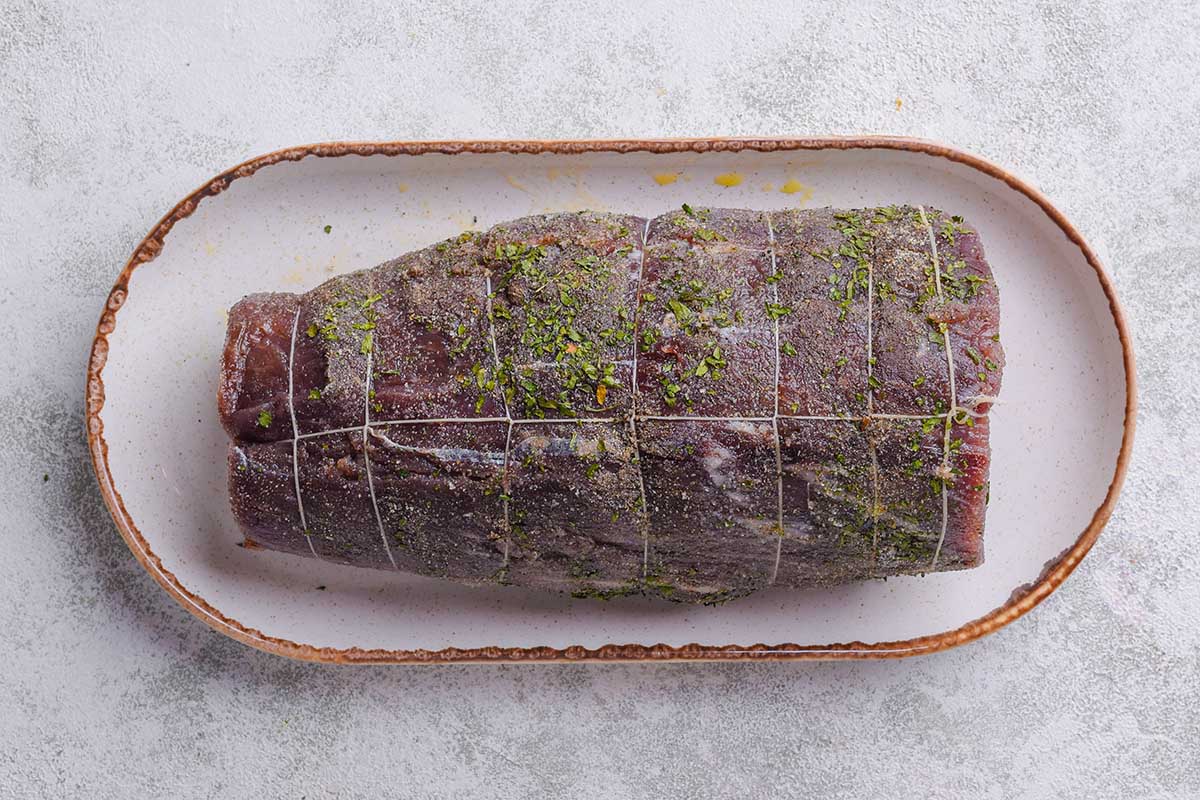
Step 2 – Smoke. Place the beef tenderloin on the smoker and smoke. Once it’s done smoking, transfer the beef to the hot grill grates and sear it on all sides.
Smoking times and temperatures
Use this guide to smoke a whole beef tenderloin to your desired doneness. The cooking times below include a quick 5-minute reverse sear at the end, but always cook to temperature rather than time.
- Rare (120°F to 125°F): 1 to 1.5 hours (pull from the smoker at 110°F to 115°F).
- Medium-rare (130°F to 135°F): 1.5 to 2 hours (pull from the smoker at 120°F to 125°F).
- Medium (140°F to 145°F): 2 to 2.5 hours (pull from the smoker at 130°F to 135°F).
- Medium-well (150°F to 155°F): 2.5 to 3 hours (pull from the smoker at 140°F to 145°F).
- Well-done (160°F): 3 to 3.5 hours (pull from the smoker at 150°F).
Always use a meat thermometer to monitor the internal temperature, as every smoker cooks a little differently.
Frequently asked questions
I prefer hickory or oak for a classic smoky flavor, but mesquite and fruitwoods like apple or cherry also work well. Because beef tenderloin has a delicate flavor compared to brisket or chuck roast, I recommend avoiding overly heavy smoke. Both wood chips and wood chunks work well.
No, I don’t find it necessary. Beef tenderloin is already one of the most tender cuts of beef, so a brine won’t make a noticeable difference. A simple seasoning blend and proper cooking temperature are all you need.
Beef tenderloin is naturally tender, so if it turns out tough, it’s usually because it was overcooked. I recommend using a meat thermometer and pulling the tenderloin from the smoker before it reaches your final target temperature, since the reverse sear and resting time will continue cooking it.
Yes, but I don’t recommend it. The reverse sear creates a flavorful crust and adds texture that smoking alone can’t achieve. It’s a small extra step that makes a big difference to the finished dish.
How to store leftovers
Fridge: Allow leftover beef tenderloin to cool completely, then wrap it tightly in plastic wrap or aluminum foil and refrigerate for 3 to 4 days.
Freezer: Place the tightly wrapped beef in a freezer-proof bag or container and freeze for 3 to 4 months. Thaw in the refrigerator overnight before reheating.
Reheating: I like to wrap the meat in foil and reheat it in the oven at 250°F. You can also slice the cold beef and gently warm the slices in a skillet over low heat with a splash of broth or water.
Smoked Beef Tenderloin
Video
Ingredients
- 2 pounds beef tenderloin
- 2 tablespoons olive oil
- 1 1/2 teaspoons sea salt
- 1 tablespoon black pepper
- 1 tablespoon dried parsley
- 1/2 tablespoon garlic powder
Instructions
- Preheat the smoker to 120C/250F using the desired hardwood. I used applewood chips.
- Brush the beef with olive oil. Mix together the sea salt, black pepper, dried parsley, and garlic powder, and rub over the beef. The tenderloin should be evenly coated on all sides with no bare spots.
- Place the beef directly on the smoker and away from the direct heat. Smoke the beef for 1 hour, or until the internal temperature reaches 120°F for rare (or your desired doneness in the notes below).
- Transfer the beef to a hot grill or a hot cast-iron skillet and sear on all sides for 5 minutes. The outside should develop a dark, caramelized crust while the center remains pink.
- Allow the beef to rest for 15 minutes before slicing and serving.
Notes
- Rare (120°F to 125°F): 1 to 1.5 hours (pull from the smoker at 110°F to 115°F).
- Medium-rare (130°F to 135°F): 1.5 to 2 hours (pull from the smoker at 120°F to 125°F).
- Medium (140°F to 145°F): 2 to 2.5 hours (pull from the smoker at 130°F to 135°F).
- Medium-well (150°F to 155°F): 2.5 to 3 hours (pull from the smoker at 140°F to 145°F).
- Well-done (160°F): 3 to 3.5 hours (pull from the smoker at 150°F).















What a wonderful recipe for smoked beef tenderloin- I use my smoke alot, but usually for smaller cuts of protein. Made this for sunday dinner and zero leftovers. Will double it next time to make smoked beef sandwiches the next day!
Thanks for the lovely feedback- I’m so glad you took a chance on this large cut 🙂
HI, I have made your beef tenderloin recipe using an oven . It had a kosher salt dry rub you left on overnight . seared it in a cast iron and then put it in the oven . I made this about a year ago and cant find the exact recipe , could you please send it to me , my family is still raving about it!
thank you
Ellen Hash
Hi Ellen! I don’t have a roasted beef tenderloin recipe (unless you’re referring to my roasted tri tip)- I do have a grilled beef tenderloin recipe, but that doesn’t involve any oven time.
Arman, I made this over the weekend and it was sensational- the meat practically melted in my mouth!!!
Thanks for the lovely review and star rating, Alborz- so glad you enjoyed the beef!
I’ve tested this smoked beef tenderloin recipe so many times that I guarantee perfection every time. It is SO juicy and tender.