Low Calorie Pizza

This post may contain affiliate links. See my disclosure policy.
My low calorie pizza features a golden, chewy crust topped with a homemade pizza sauce and your choice of toppings. Each slice comes in significantly lighter than traditional pizza. It’s an easy option for a more balanced pizza night.
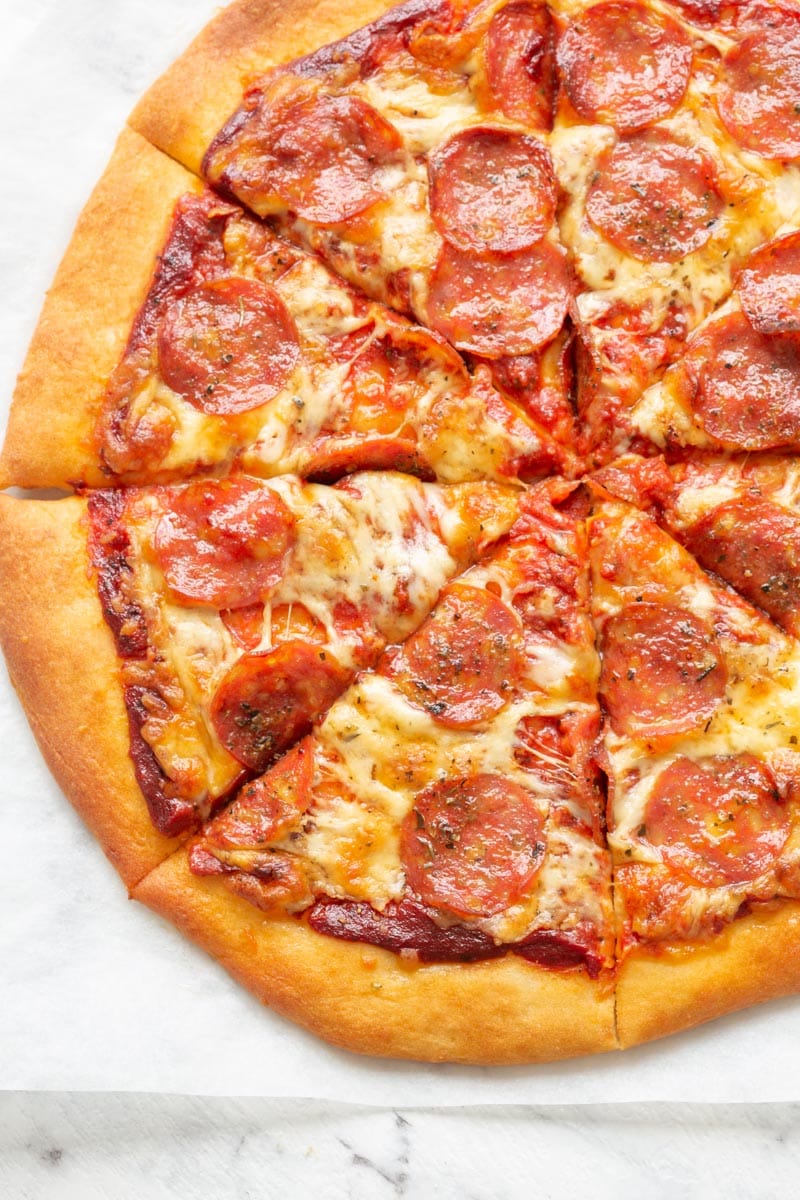
I’m not ashamed to admit I’ve tried just about every lighter pizza variation out there. While some were good, none quite matched the texture and flavor of a classic slice. Traditional pizza can contain 200–300+ calories per slice, depending on the crust and toppings, which adds up quickly. So I went back to my kitchen to develop my own version.
I use my Greek yogurt dough as the base, replacing part of the traditional flour-and-oil dough while still baking up golden and chewy. Paired with a simple sauce and measured toppings, it creates a pizza that’s lighter per slice while still delivering the structure and flavor of any good pizza.
Table of Contents
Why I love this recipe
- The dough is easy to make. Thanks to the magic of self-rising flour, there’s no yeast, kneading, resting, nada.
- The perfect texture. The pizza crust is crispy on the outside and pillowy soft in the center, with a subtle tang from the yogurt.
- Fast. Again, no kneading or rest time means the entire process is quick.
- Customizable. Like any good pizza recipe, you can add any toppings you want. I left a few low-cal, high-protein options below.
Key Ingredients
Here’s what goes into this low calorie pizza crust, along with kitchen notes. Full measurements are in the recipe card below.
- Self-rising flour. This is one of my favorite ingredients for baking. It’s essentially a combination of all-purpose flour, baking powder, and salt. When mixed with yogurt, you get an elastic, pliable dough. If you don’t have any on hand, you can easily make your own.
- Non-fat Greek yogurt. To give the dough elasticity. The yogurt bakes into the dough and doesn’t leave a noticeable tang. You can also use plain yogurt, though it will be higher in calories.
- Salt. Even though the self-rising flour has a little salt, we add a pinch more just to balance out the flavor.
- Italian seasoning. Optional, but it adds an Italian flavor to the dough.
For the low-calorie pizza sauce:
- Tomato sauce. Also known as passata (not ketchup). Use one with no added sugar or salt.
- Spices. I’m using garlic, onion powder, salt, pepper, and Italian seasoning for flavor.
- Brown sugar substitute. Most pizza sauces have some sugar, so we cut the calories by adding a sprinkle of a brown sugar substitute.
- Toppings. I used part-skim mozzarella cheese, but any fat-free or low-fat cheese works. I also added turkey pepperoni for extra protein.
Topping ideas
Don’t feel obligated to keep your pizza plain. Get creative! Some of my favorite lower-calorie toppings are onions, spinach, mushrooms, olives, or fresh basil.
Proteins like lean ground turkey, chicken sausage, or sliced chicken breast will help you feel fuller for longer.
How to make low calorie pizza
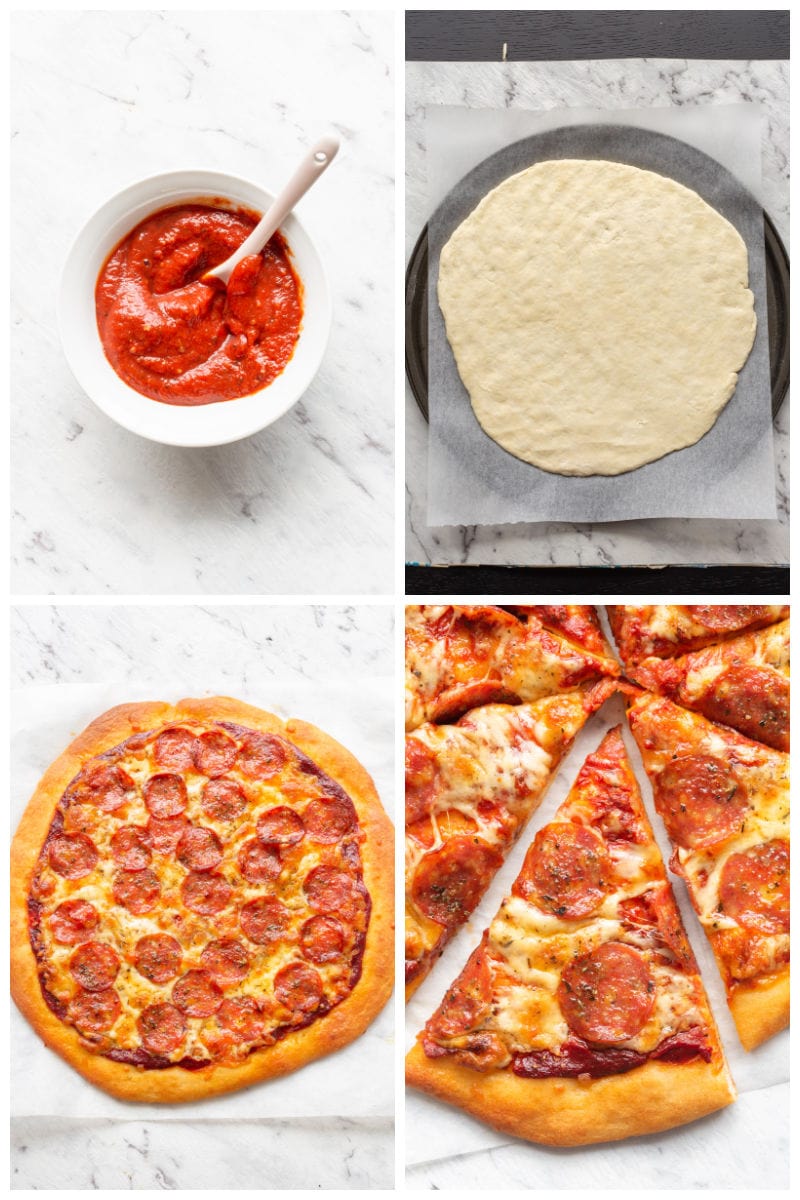
Step 1- Prep. Preheat the oven and line a pizza pan with parchment paper. Whisk together the tomato sauce ingredients.
Step 2- Make the dough. Combine the dough ingredients in a bowl until smooth.
Step 3- Shape. Transfer the dough ball to a floured kitchen surface and roll it to about 10 inches wide. Place it on the prepared pan.
Step 4- Assemble. Pour the sauce over the crust, and add half the cheese and all of the pepperoni. Top with the remaining cheese.
Step 5- Bake. Bake until the cheese melts and the crust is golden. Let it cool briefly before slicing.
Arman’s recipe tips
- Use a stand mixer (optional). While I prefer mixing the dough by hand, a stand mixer helps incorporate the yogurt evenly and create a smoother texture.
- Consider the pan. For a thicker, crispier crust, bake in a preheated cast iron skillet. For a thinner crust, use a pizza pan or sheet tray.
- Lightly oil sticky dough. Depending on the yogurt, sometimes the dough can be tacky. If you’re having difficulty stretching it to fit the pizza pan, lightly coat it with olive oil to make it easier to work with.
Storage instructions
To store: Leftovers can be refrigerated in an airtight container for up to 5 days.
To freeze: Place leftover slices in a ziplock bag and store them in the freezer for up to 2 months.
Reheating: Microwave slices for 20-30 seconds or warm in a preheated oven. I actually like to reheat slices on a hot skillet until the edges are hot and crispy- it tastes like it’s fresh out of the oven.
Frequently asked questions
Greek yogurt dough replaces part of the traditional oil-heavy pizza structure. Using non-fat yogurt and self-rising flour reduces the amount of added fat while creating a chewy crust.
Yes, you can. Use part-skim or fat-free mozzarella cheese (as I’ve done) and add more vegetable toppings. You can also roll the dough to 12 inches instead of 10, then slice it into 10 pieces.
While the crust is slightly lighter than a traditional yeast-and-oil dough, it still bakes up golden and chewy.
Low Calorie Pizza
Ingredients
- 2/3 cup self rising flour 80g
- 2/3 cup plain Greek yogurt 160g, non-fat
- 1/4 teaspoon salt 1.5g
- 1 teaspoon Italian seasonings 1g
For the low calorie pizza sauce
- 1/4 cup tomato sauce 60g
- 1/2 teaspoon Italian seasoning 0.5g
- 1/2 teaspoon brown sugar substitute 2g
- 1/4 teaspoon salt 1.5g
For the low calorie toppings
- 1/2 cup fat free mozzarella cheese 56g, divided
- 1/4 cup Pepperoni 30g, reduced fat or Turkey pepperoni
Instructions
- Preheat the oven to 200C/400F. Line a large baking sheet or pizza tray with parchment paper and set aside.
- In a mixing bowl, add the flour and yogurt and mix until combined. Add the salt and Italian seasonings and shape into a smooth ball of dough.
- Lightly flour a kitchen surface. Transfer the ball of dough onto the sheet of parchment paper. Use a rolling pin to roll it out to 10 inches wide. Transfer the dough onto the lined sheet or tray.
- In a small bowl, whisk together the sauce ingredients until smooth.
- Spread the sauce over the pizza crust. Add half the shredded cheese, followed by the pepperoni, then the remaining cheese.
- Transfer the pizza into the oven and bake for 10-12 minutes, or until the cheese has melted and the crust is golden. Remove the pizza from the oven and slice into eight slices.
Notes
- Nutritional information: Calories listed reflect the crust and sauce only. When made with the listed cheese and pepperoni toppings, each slice contains approximately 83 calories. A full 10-inch pizza (no toppings) is 440 calories.
- Pizza weight: Each slice without toppings weighs approximately 1.2 ounces (35g). With the cheese and pepperoni, each slice will be 1.55 ounces (44g).
- Leftovers: Keep refrigerated for 5 days or frozen in a ziploc bag for 2 months.
Nutrition
More lower calorie recipes to try
I love a batch of these low calorie chips with salsa or guacamole for a savory snack.
Low calorie cereal topped with almond milk is my current favorite breakfast.
Chewy, doughy low calorie bagels that don’t need any yeast or proofing time.
Adding more veggies for bulk makes this low calorie pasta an ideal dinner.
If you want more healthy pizza recipes, Try my protein pizza, eggplant pizza, cottage cheese pizza crust, or cloud bread pizza.
Originally published December 2021. Updated to improve measurement accuracy and provide revised nutrition estimates.















would this work with lower fat or fat free greek yoghurt??
Absolutely, Paige. I’ve made it many times using non-fat Chobani or Fage.
Is the flour to yogurt ratio correct? I tried to make the dough and it came out far too sticky.
Your recipe says 80g flour and 160g of flour. A ratio of 2:1
However your 2 ingredient Greek yogurt dough recipe is closer to 1:1 with 220g Flour and 250g Yogurt.
Really keen on trying out this recipe.
Any help would be greatly appreciated.
Hi Alan, this dough is a little bit trickier to work with than the 2 ingredient dough because the recipe aims to keep calories down and we also want the pizza base to be a bit crispier for pizza. If you’re finding it too sticky to roll out, make sure your parchment and rolling pin are dusted heavily with flour, this should help you stretch it out without sticking. It may also be that your yogurt is too runny. Let us know how you go!
Was so good and easy even my husband liked it!
Hi Brittany, thanks for sharing! So glad you both enjoyed this one.