Chicken Adobo

This post may contain affiliate links. See my disclosure policy.
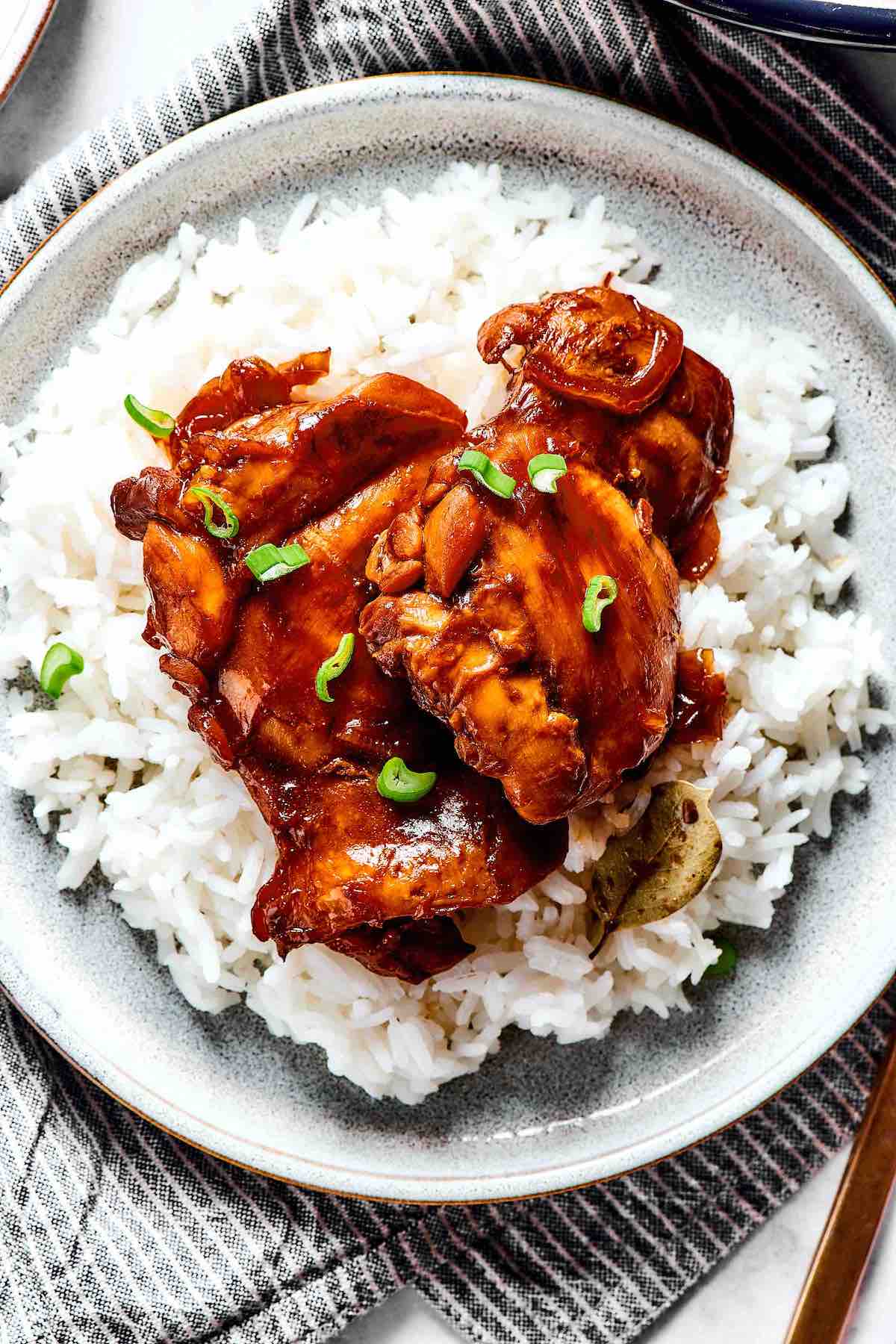
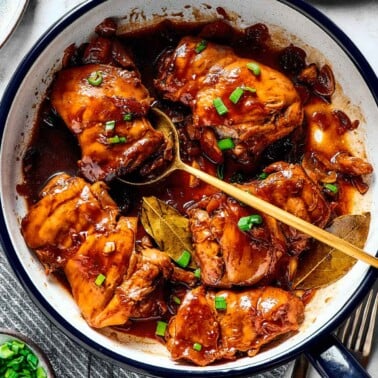
Bring authentic Filipino flavors into your home with my Filipino chicken adobo recipe. It features chicken thighs braised in a slightly spicy, savory, and tangy glaze.
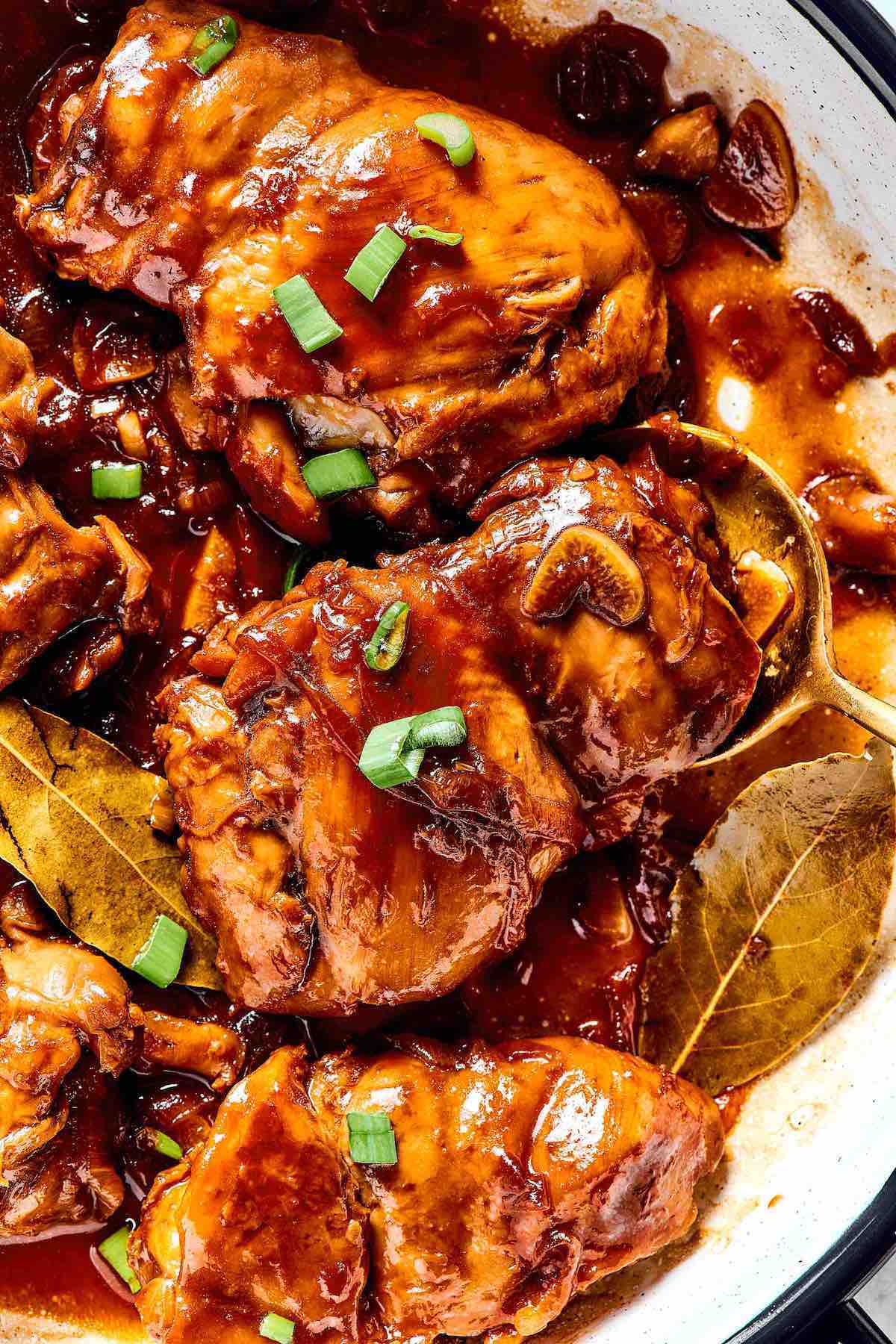
My authentic Filipino chicken adobo recipe

Chicken adobo was one of the first Filipino dishes I learned to make, and it’s still one of my favorites. I love how a handful of everyday ingredients can turn into something that tastes like it’s been simmering all day.
My version stays true to the classic, with chicken thighs gently simmered in a mix of soy, vinegar, and bay leaves until they fall apart tender. The sauce itself is rich, glossy, and I never skip spooning every last bit over a bowl of steamed rice. Here’s why it’s a dinnertime staple:
- One-pot dinner. Once everything is in the pan, the chicken simmers until tender.
- Ready in about 30 minutes. While I do sometimes serve it to guests, it’s more often a weeknight dinner for my partner and me.
- Works with different cuts of chicken. I usually make it with thighs, but I’ve also had great results with drumsticks, quarters, and even chicken breasts.
Let’s make this together now!
Table of Contents
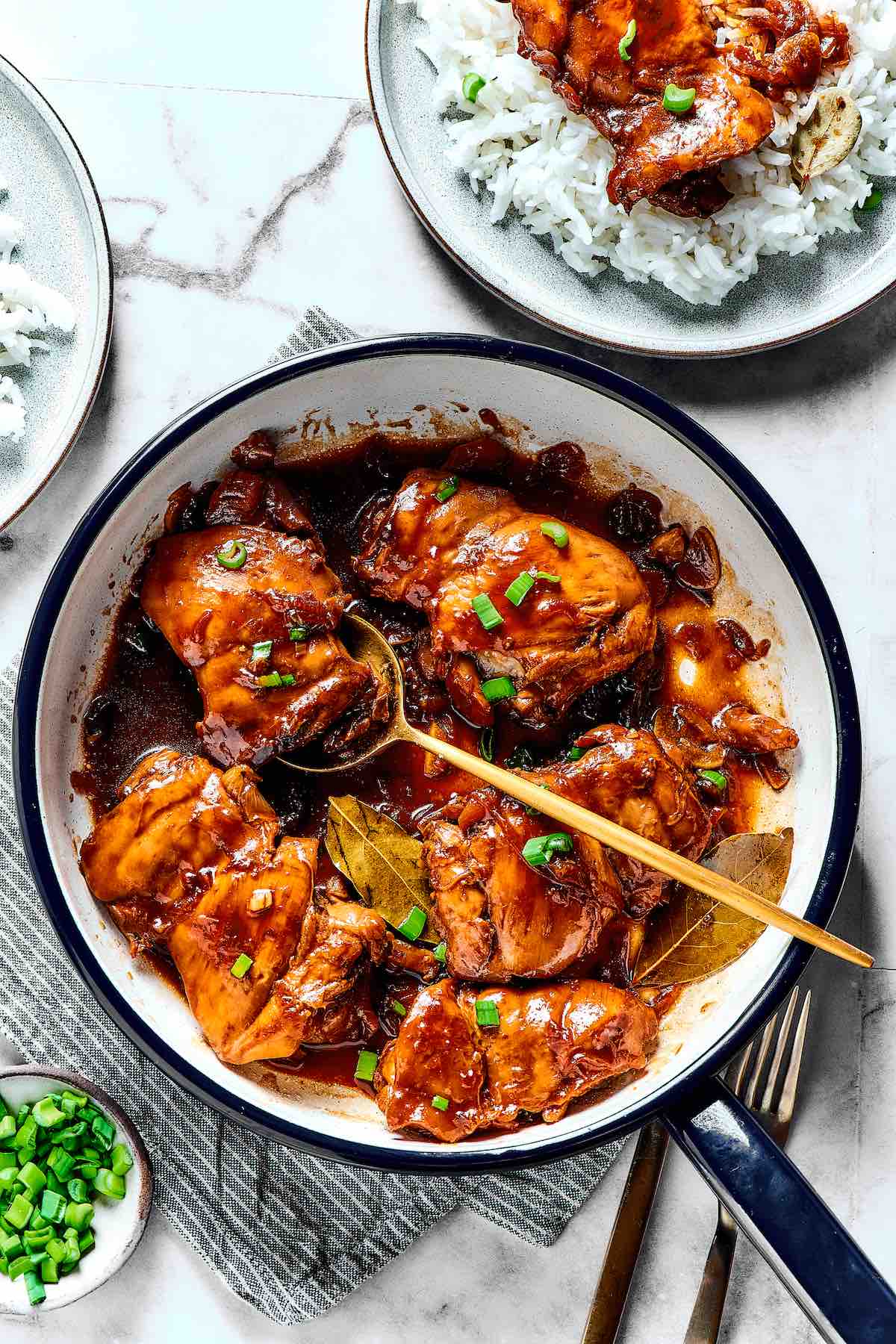
Key Ingredients
Here’s what you’ll need, along with my kitchen notes. Full measurements are in the recipe card below.
- Chicken thighs. I always use bone-in, skin-on thighs because they stay juicy and add extra flavor to the sauce. Boneless thighs or chicken breasts work too, but I’ll check on them sooner since they cook a little faster.
- Vinegar. This is what gives adobo its signature tang. I usually use white vinegar, but apple cider vinegar works well if you prefer a milder flavor.
- Soy sauce. Regular or dark soy sauce will work. Use low-sodium soy sauce or gluten-free coconut aminos if needed.
- Ginger, garlic cloves, and onion. Completely optional, but I like adding one or two for a little gentle heat. Remove the seeds if you prefer it milder.
- Red chilies. Sliced and seeded. Adjust the number of chilies to taste.
- Bay leaves. For flavor and aroma.
- Brown sugar. Just enough to balance the soy sauce’s saltiness and the vinegar’s sharpness without making the dish sweet.
- Black peppercorns. To give the stew a peppery kick. You can remove them before serving or use freshly grated black pepper instead.
- Chicken broth. I usually use low-sodium chicken broth so I can control the seasoning, but homemade broth is even better if you have it.
How to make chicken adobo
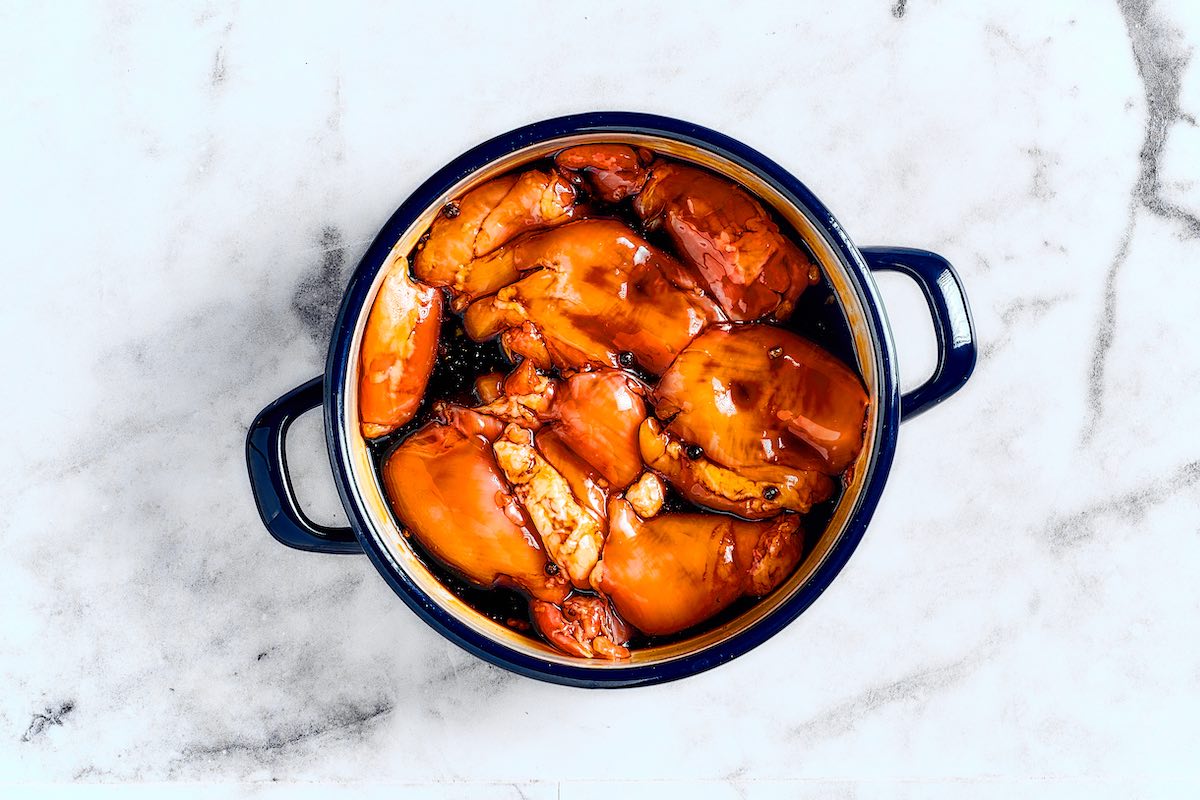
Step 1- Marinate the chicken. In a large bowl, combine all the ingredients. Toss the chicken in the sauce and let it sit for 5 minutes to marinate.
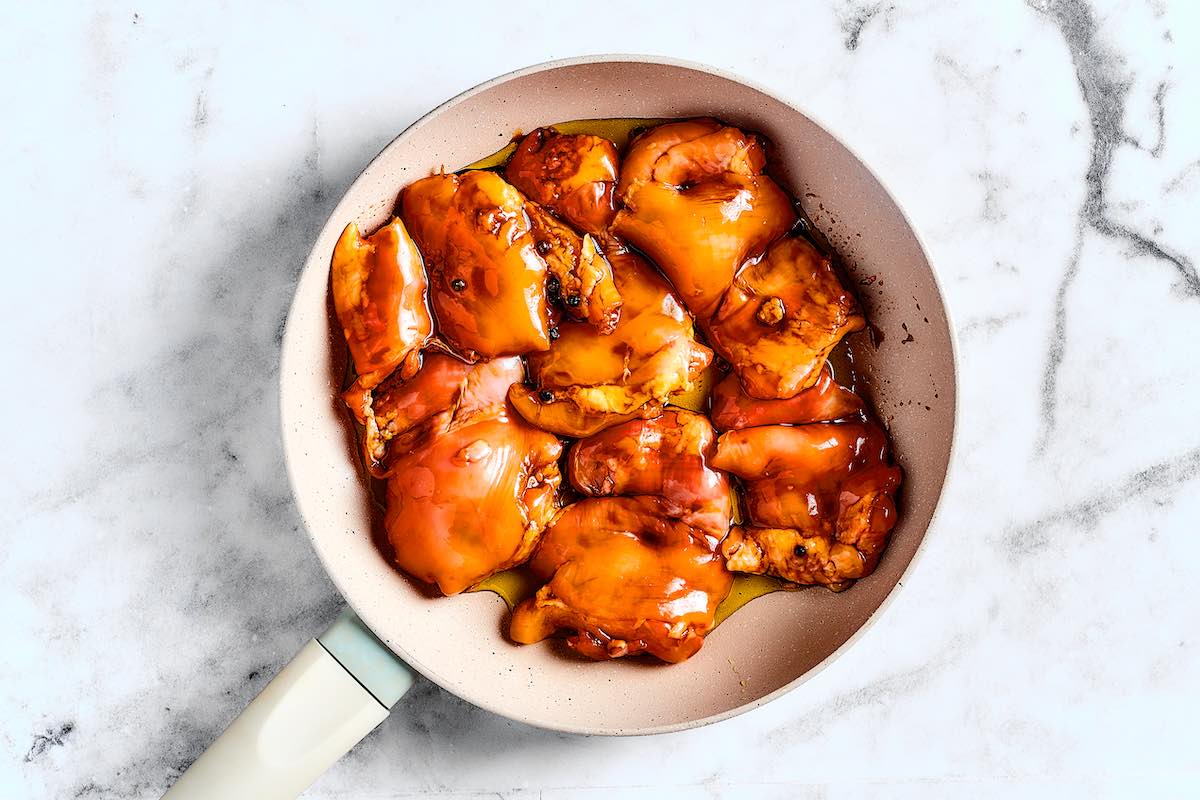
Step 2- Simmer. Pour everything into a deep saucepan or pot over medium-high heat. Bring it to a boil, then reduce to medium-low heat and simmer, covered, for 20 minutes.
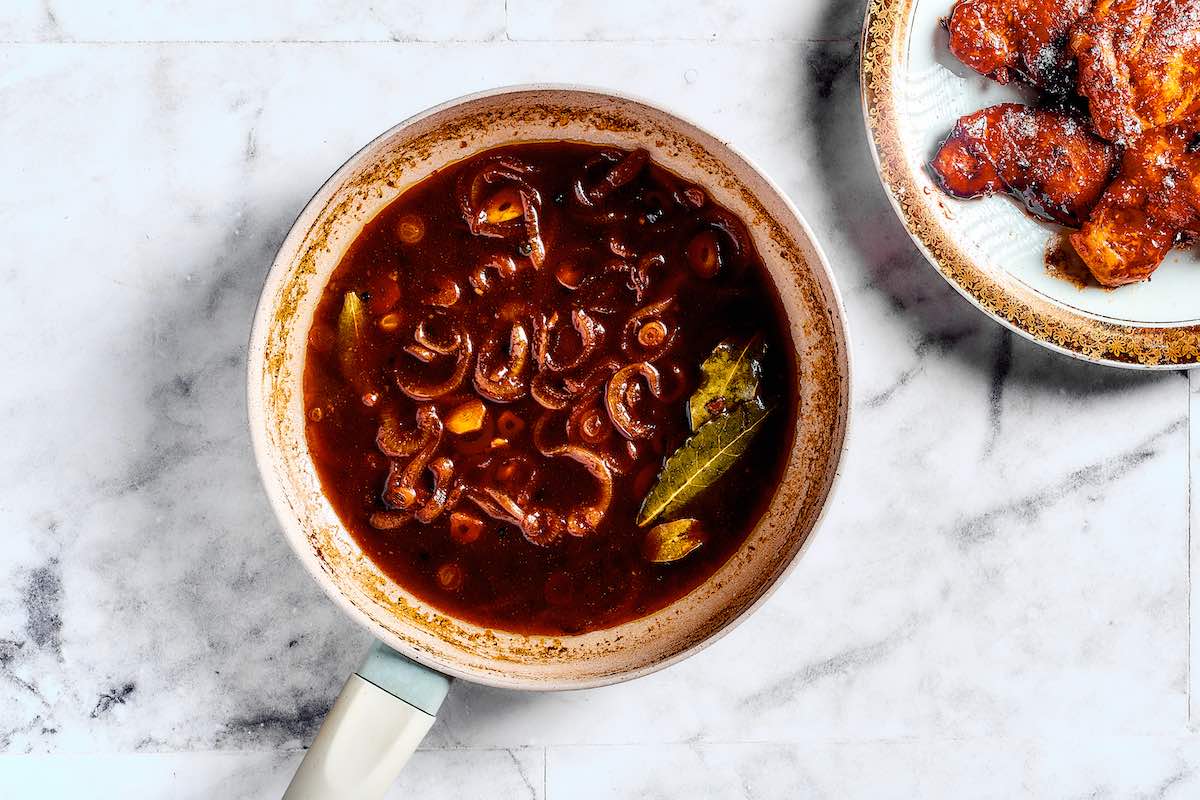
Step 3- Thicken the sauce. Remove the chicken pieces from the pot and allow the sauce to continue simmering until it reduces.
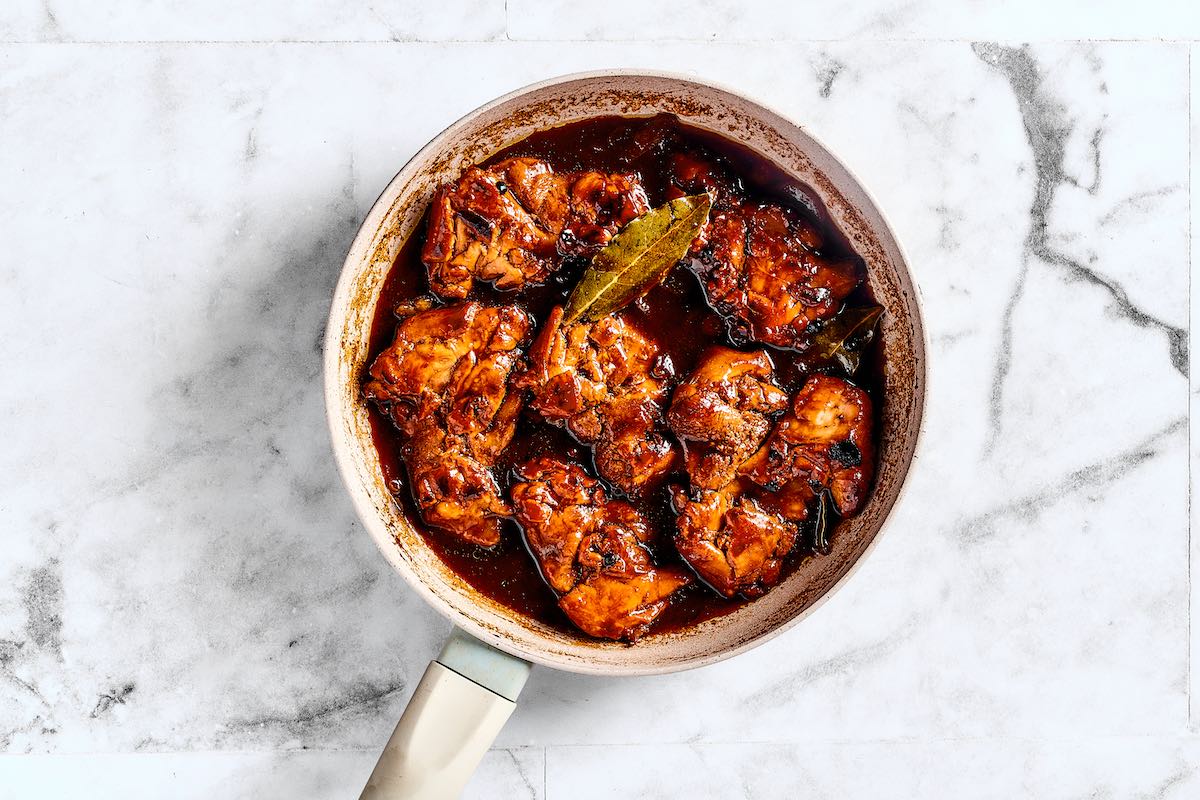
Step 4- Assemble. Return the chicken to the pan and cook everything for 5 minutes. Serve warm.
Arman’s recipe tips
- Give the chicken a chance to marinate. Even 5 minutes makes a difference, but if I’m planning ahead, I’ll leave it in the fridge for a few hours or overnight.
- Keep the heat gentle. Resist the urge to turn up the heat to speed things along. A gentle simmer gives the chicken time to become tender and lets the sauce reduce into that rich glaze.
More weeknight chicken dinners


Chicken Adobo
Video
Ingredients
- 1 pound chicken thighs skin on
- 1/4 cup apple cider vinegar
- 3 tablespoons soy sauce
- 3 cloves garlic minced
- 1/2 inch ginger minced
- 1 small red chili seeded and chopped
- 2 whole bay leaves
- 2 tablespoons brown sugar
- 1 tablespoon black peppercorns
- 1/2 large onion sliced
- 1 cup chicken broth
Instructions
- Add all the ingredients except the chicken thighs to a large mixing bowl and mix until combined. Add the chicken thighs and let it sit for 5 minutes to marinate. You can marinate the chicken up to 24 hours in advance.
- Transfer everything into a deep saucepan or pot and place over hot heat. Bring it to a boil, then reduce it to medium and let everything simmer, covered, for 20 minutes.
- Remove the chicken from the pot and allow the sauce to continue to simmer until it reduces and thickens.
- Return the chicken to the pan and cook everything together for a further 5 minutes, or until the chicken is glazed.
Notes
Nutrition
Originally published January 2023















Great recipe thanks
Thanks for the lovely feedback and review, Bernie!
I always remove skins from chicken thighs. You think it will still bake as it should?
Hi Mario! I emailed you addressing both questions- I’m glad you found a workaround and those pictures you shared looked great. I love how you made this 3 x in one week!
Good recipe. So this is Filipine dish? Do you know they eat it?
This was the best chicken adobo recipe I’ve made, and I’ve made a ton of them. This seriously reminded me of the Phillipines.
Thanks, Eramus!
I married into a Filipino family, and my father-in-law was a cook in the US Navy for 20 years. He taught me how to cook adobo.
His “secret ingredient” is to omit the 2 tablespoons of brown sugar and in it’s place, substitute 2 teaspoons of standard barbecue sauce. Doesn’t have to be a fancy brand of barbecue sauce; even supermarket brands work well. Don’t overdo it. It will lend a smoky-sweet background flavor that is subtle, but it gives the dish a great flavor!
I made this with skinless boneless chicken thighs and it was absolutely delicious! I hit the “Jump to Recipe” link so missed the tip on searing the chicken because it’s not in the instructions. Still so very yummy.
I will definitely try this recipe , could it marinate overnight or not?
Will it make much difference if I take the skin off
Thanks
I can’t wait to try it
My father-in-law taught me to make Filipino adobo, and marinating it overnight is a no-no. The vinegar is too strong and will begin to digest the chicken and turn it to mush. Plus, it isn’t necessary for great flavor.
Adobo is, at it’s Filipino best, a powerful combo of vinegar, soy sauce and garlic. Put them together and they become more than the sum of the original parts. It’s basically the “national dish of the Philippines”.