Powdered Sugar Substitute

This post may contain affiliate links. See my disclosure policy.
Once I realized how easy it was to make sugar free powdered sugar at home, I never looked back. All you need is one keto sweetener and a blender or food processor.
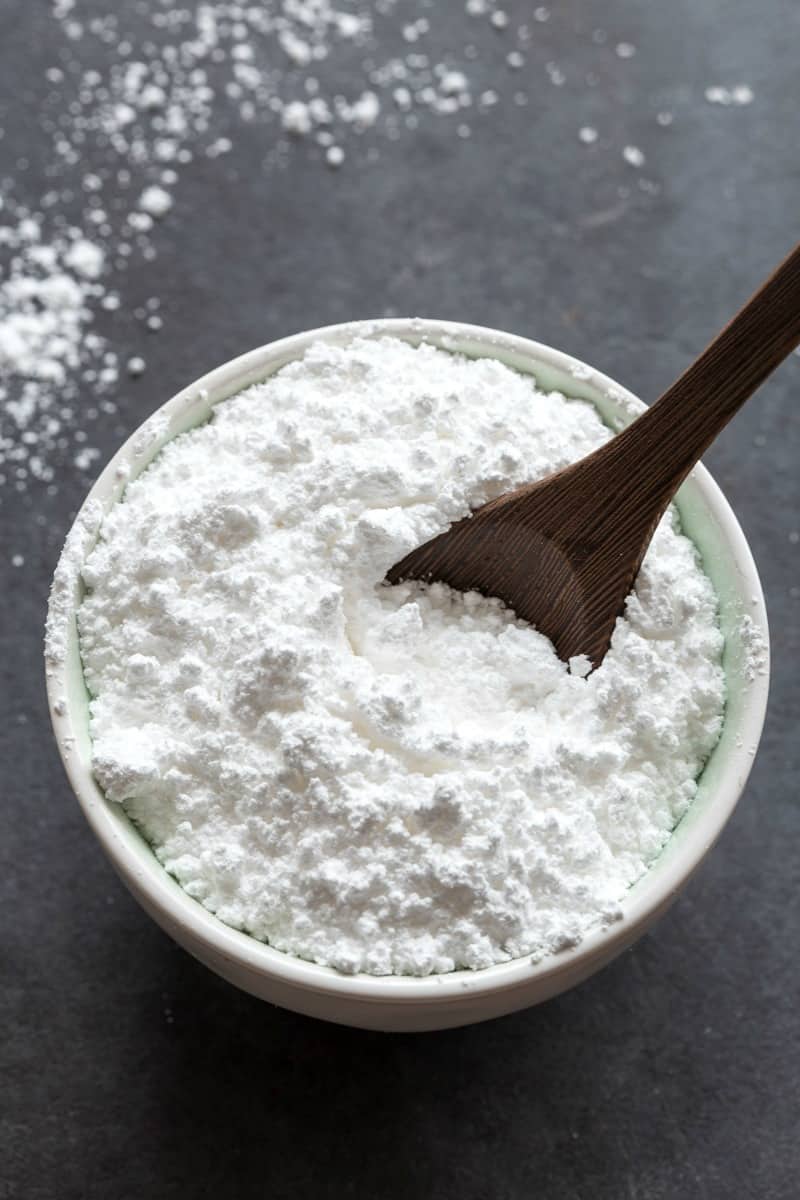
Many grocery stores stock sugar free powdered sugar, and calling it expensive is an understatement. Growing up, my mom always made her own powdered sugar from scratch, so once I started baking low carb, I did the same using keto sweeteners.
The trick is that while almost any granulated sweetener can be blended down into a powder, they don’t all behave the same in my recipes. I’ve tested the six sweeteners I bake with most often and included my notes below so you can choose the one that works best for your needs.
Table of Contents
Recipe highlights
- Easy to make. All you need is one ingredient, a blender, and less than a minute.
- It tastes like the real thing. So long as you use one of my preferred sweeteners, you won’t have to worry about a fake sugary aftertaste.
- Cheaper than store-bought. You’ll pay upwards of $5 more per bag for powdered sweetener versus granulated, and the only difference is the consistency.
What sweetener is best?
Not all sugar-free sweeteners are created equal, and some are better for turning into powder. Here’s a quick breakdown:
- Allulose. My preferred sweetener, as it has the best flavor and turns fluffy like regular powdered sugar. I also find it dissolves exactly like white sugar does.
- Erythritol. I don’t mind using erythritol or erythritol blends as a sugar alternative, but I find it’s better to dissolve it in simple syrups for baking rather than blend it into a fine powder.
- Monk fruit sweetener. Similar in rank to erythritol. It wasn’t as fluffy as I would have liked, but it tasted pleasant. Be careful, because monk fruit sweetener is usually much sweeter than allulose or erythritol.
- Xylitol. I generally don’t use xylitol in my recipes, but I tried this as I’d seen a powdered sugar brand use it. It blended well but left a quite bitter aftertaste. It’s also VERY dangerous to dogs, so don’t share any treats if you use xylitol.
- Stevia. The only one I wasn’t a fan of was the one I found had a funky, slightly metallic aftertaste.
How to make sugar free powdered sugar
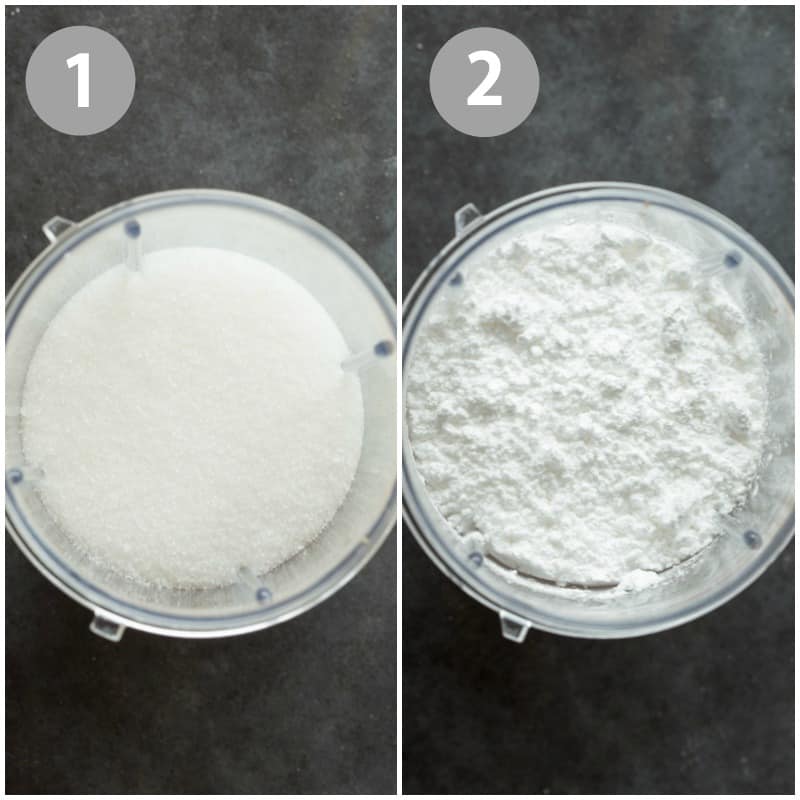
I’ve included step-by-step photos below to make this recipe easy to follow at home. For the full printable recipe instructions and ingredient quantities, scroll to the recipe card at the bottom of this post.
Step 1- Blend. Blend the sweetener in a blender or food processor until fine, white, and fluffy.
Step 2- Store. Keep it in a sealed jar or container.
Storage instructions
Keep the powdered sweetener in an airtight container in a cool, dry place away from direct sunlight. If stored properly, it will keep well for several months.
Frequently asked questions
Yes. A spice grinder, coffee grinder, or even a small food processor works well. It may take a little longer to achieve a fine, powdery consistency.
This usually happens if it has been exposed to moisture. Store it in an airtight container, and if needed, blitz it in the blender again to restore its powdery texture.
Recipes using sugar free powdered sugar
Now that you’ve made a batch, here are some of my favorite ways to use it:
- Keto frosting
- Keto cinnamon rolls
- Sugar free ice cream
- Keto meringue cookies
- Keto lemon bars
- Dust over keto pancakes, keto french toast, or keto cupcakes
Powdered Sugar Substitute
Ingredients
- 1/2 cup granulated sweetener of choice * See notes
Instructions
- In a high speed blender or food processor, blend your sweetener until fluffy.
- Transfer your powdered sugar to a sealable container.















I have just been diagnosed with type two diabetes and I have to cut out all sugar and was told not to use artificial sweeteners because they are bad for me and continue additives that are not good
So can you tell me if these sugar substitutes are ok for a diabetic?
Carole
Hi Carole- I’d recommend speaking with your doctor or medical professional to confirm if sugar substitutes are okay for diabetics. While this is sugar free, I’m not sure whether they would be suitable or not.
In the keto frosting recipe, it says to use 3 CUPS sugar-free powdered sugar, but in your recipe for making your own sugar-free powdered sugar, it says to use 1/2 cup granulated sugar of choice. I really confused. I’m planning to make this on Thursday, 6/25. HELP!
Hi Mary- yes I hear you. You’ll need to just make 6 portions of this recipe. 6 half cup servings equals 3 cups.
Yummy
Glad you enjoyed the recipe!
Not sure what kind of Xylitol was being used, but Xylitol is the only thing I use because it does not have any weird after taste. Monk fruit and stevia taste like saccharin, erythritol has an odd minty quality that is not like regular mint, and allulose has a distorted sugar taste that I find unpleasant.
Xylitol has a bit of carb, but tastes more like sugar than anything else I have tried. It can be readily powdered, and is actually sold in powdered form.
Hi Shaunie, thanks so much for sharing your insight on this. With so many sweeteners out there these days, it’s great to know what people are enjoying!
Can I substitute stevia for the powdered sugar?
Hi Lynnette, I wouldn’t recommend stevia for this recipe. Powdered allulose, erythritol or monk fruit blends are the best options that will act as close to real powdered sugar in baking as possible.
Can you explain how you would dissolve the allulose in a simple syrup before blending into a fine powder?
Hi Tami, my comment refers to my preference of using some sweeteners in simple syrups, instead of blending them into a powder. I’ll fix this up for clarity! If you want to use allulose for this recipe, you certainly don’t need to dissolve it before blending.
Can you use Truvia to make the confectioner sugar, or the regular sugar?
Hi, I just found your recipes when I looked for “delicious wonderful absolute best keto low carb chocolate chip cookie recipes.” Then I found so many that I want to try, but you said something that has me confused.
You said that Allulose is your favorite for making powdered sugar. Then, under “What Sweetener is Best?,” you said “Allulose.” “I typically like using allulose as a sugar alternative, but I find it’s better to dissolve it in simple syrups than blend it into a fine powder.” You further stated that you prefer Erythritol (you left out one letter) sweetener as it has the best flavor and turns fluffy like regular powdered sugar.
You said “Powdered sweeteners should be kept in an airtight container away from direct sunlight. It’ll stay fresh for up to two weeks.” I have never had a problem with real sugar becoming unfresh; after all, it is used to preserve food. I have made keto powdered sugar (a blend of Erythritol, Allulose, and a bit of Stevia). I know that I have never felt the need to throw away regular powdered sugar even if had become somewhat caked because that is an easy fix. I have stored my homemade keto powdered sugar for several weeks so far, and I’ve not had any problems.
Thank you for reading this, and I welcome your comments. I do not like being wasteful, but I would not knowingly jeopardize the success of a recipe, either.
I’m glad I found your site.
Hi Cynthia- thanks for your detailed comment. I appreciate it.
I find allulose is best for this and have amended the notes in the recipe card to reflect it- With erythritol or monk fruit, it really comes down to the brand used- I don’t solely recommend either because there is a huge margin for error. When testing this recipe, I did find pre-blended allulose did get a little rancid after two weeks- I can’t really vouch for other sweeteners, but it got somehow a little moist at the base (and there was no moisture in the room or stored with it).
If you have a homemade keto powdered sugar that holds up and bakes well, don’t change it on my account- it sounds like the erythritol you are using is one of the better ones 🙂
Hi! I’m new to keto, what brand of erythritol do you recommend for making your powdered sugar? I know you’ve recommended Anthony’s allulose. Which one should I start with, thinking of using it in your raw cookie dough recipes
Hi Jodi- the eryhritol brand I used in my testing was Anthony’s too. I would stick with allulose though- it’s the most consistent and best tasting.
I tried stevia and the crystals never broke down. I tried using it in frosting and it was grainy and like eating sand. Had to scrap the batch..
Hi Deb- I’m not surprised, seeing as in the post, I mention how stevia is the only one that I don’t recommend because it didn’t turn out well at all.
Arman, I’m sorry but you contradicted yourself. You said by far Allulose was your preferred sugar to make into a powered sugar but then you said you didn’t think it was good for a powdered sugar and it was better in simple syrups. I want to get this right so please, which is it? Thanks very much.
Was easy as directed but one issue- how do you get if from the food processor without it going everywhere?
Any tips/tricks would be great
Thank
Hi Jill, you could try stretching some plastic wrap over the top of the food processor bowl before securing the lid to keep everything contained a little more, and then carefully scoop it out to a jar for safe keeping. Hope this helps!
Loving your recipes. Being new to Keto cooking, it’s great to find shortcuts and make things a little cheaper! Thank you
You are so welcome, Edie, and that has always been one of my goals with developing low carb recipes- develop a bunch of staples so you can save a bunch of money, too. 🙂
You say you prefer allulose and then say you don’t prefer it. Which do you prefer for the powdered sugar texture?
4
Hi Chris, I’m not sure which section you’re referring to but for clarity, I find allulose to be the best for this recipe, providing the best powdered sugar texture.
Have you done any baking with inulin?
I haven’t Stephanie- do you use it like sugar?