Eggplant Curry

This post may contain affiliate links. See my disclosure policy.
My one-pot eggplant curry features tender caramelized eggplant simmered in a creamy coconut curry sauce. It’s deeply flavorful, comforting, and easy enough for a weeknight dinner.
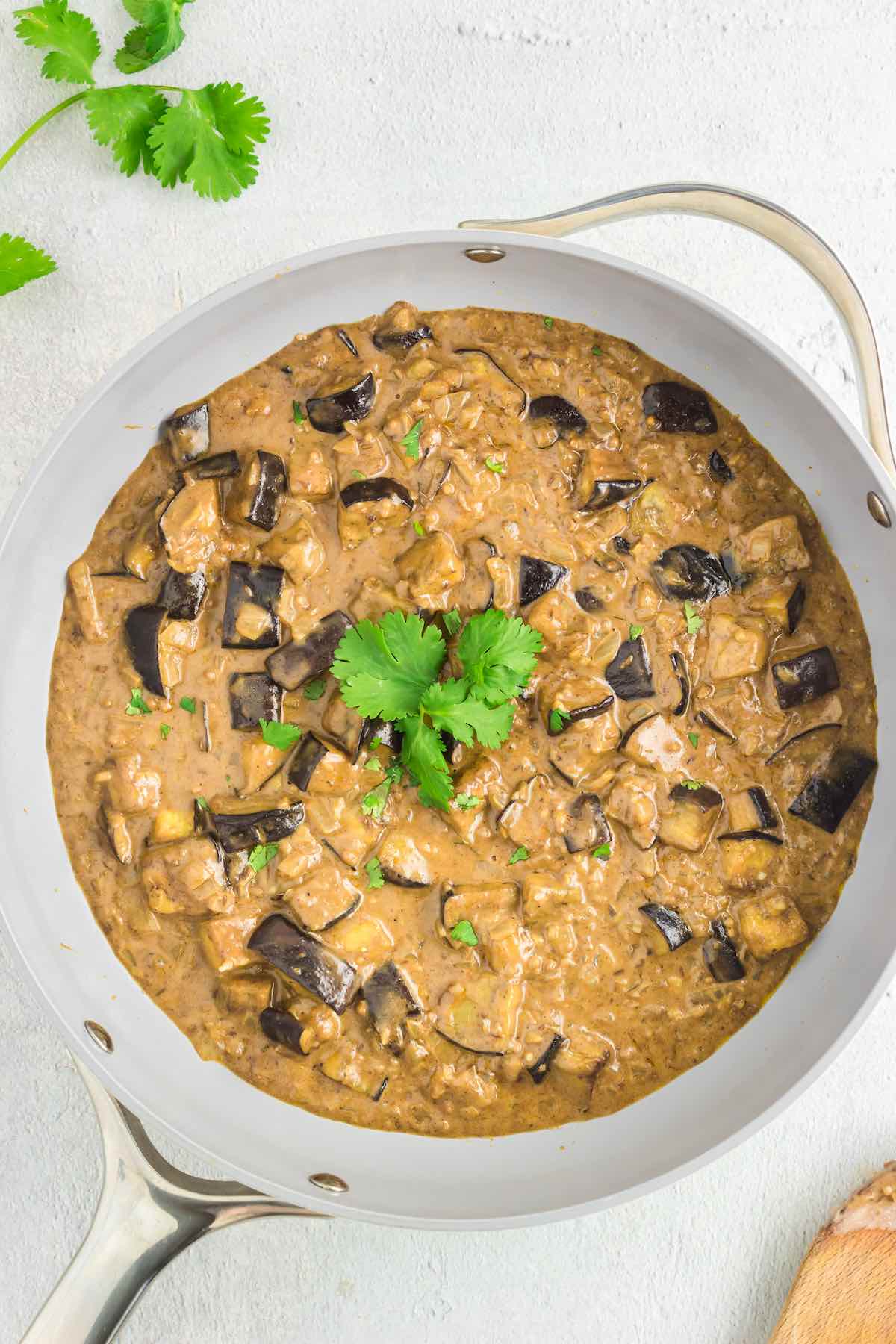
I rarely make a veggie-heavy curry unless it has a meaty, satisfying texture and flavor. This is where this eggplant curry comes in.
The curry itself is the easy part- my tried-and-true combination of coconut milk and warm spices always delivers. What made recipe testing interesting was figuring out the best way to cook the eggplant so it stays tender without turning mushy.
The first few times I tested this curry, I rushed the eggplant and didn’t brown it properly, leaving the curry tasting flat rather than rich and deeply savory. I eventually swapped oven roasting for sautéing, which gave the eggplant beautifully caramelized edges while still letting it soak up the sauce’s flavor. It’s especially good with basmati rice or warm naan on the side.
Table of Contents
Recipe highlights

Surprisingly satisfying for a vegetable curry. I’m a full-fledged carnivore (and so is my partner), but this is one of the few veggie-heavy dishes we actually crave.
The leftovers are even better. I actually prefer this curry the next day because the eggplant soaks up even more of the coconut curry sauce overnight.
No salting necessary. Most eggplant recipes call for salting the eggplant beforehand to draw out moisture, but I found sautéing it first achieves the same result without the extra waiting time.
Great for eggplant skeptics. I know eggplant can be quite ‘love or hate’, but properly browning it completely changes the texture and flavor. You won’t find mushy, bitter eggplant here.
Key Ingredients
Here are the main players in eggplant curry, along with my kitchen notes. Full measurements are in the recipe card below.
- Eggplant. Look for one large, firm eggplant with no soft spots. Cut it into equal-sized cubes so it cooks consistently. I once tested this with an overly ripe eggplant, and it completely broke down into the sauce instead of holding its shape.
- Oil. I used olive oil to sauté the eggplant and spices, but any neutral-flavored oil will do.
- Cumin seeds and mustard seeds. Fresh whole spices are preferred, but I’ve used dried spices in a pinch. Just skip the step of roasting the seeds; otherwise, they will burn.
- Garlic, ginger, and onion. These aromatics build the base flavor of the curry. I don’t recommend using dried substitutes here since the flavor won’t be nearly as rich.
- Garam masala. I prefer buying garam masala from Indian grocery stores because the flavor is usually fresher and more aromatic- and often cheaper too.
- Tomato paste. Adds richness and slightly thickens the sauce.
- Coconut Milk. Full-fat canned coconut milk gives the curry the best texture and prevents the sauce from turning watery or thin. Coconut cream also works if you want a richer curry.
How to make eggplant curry
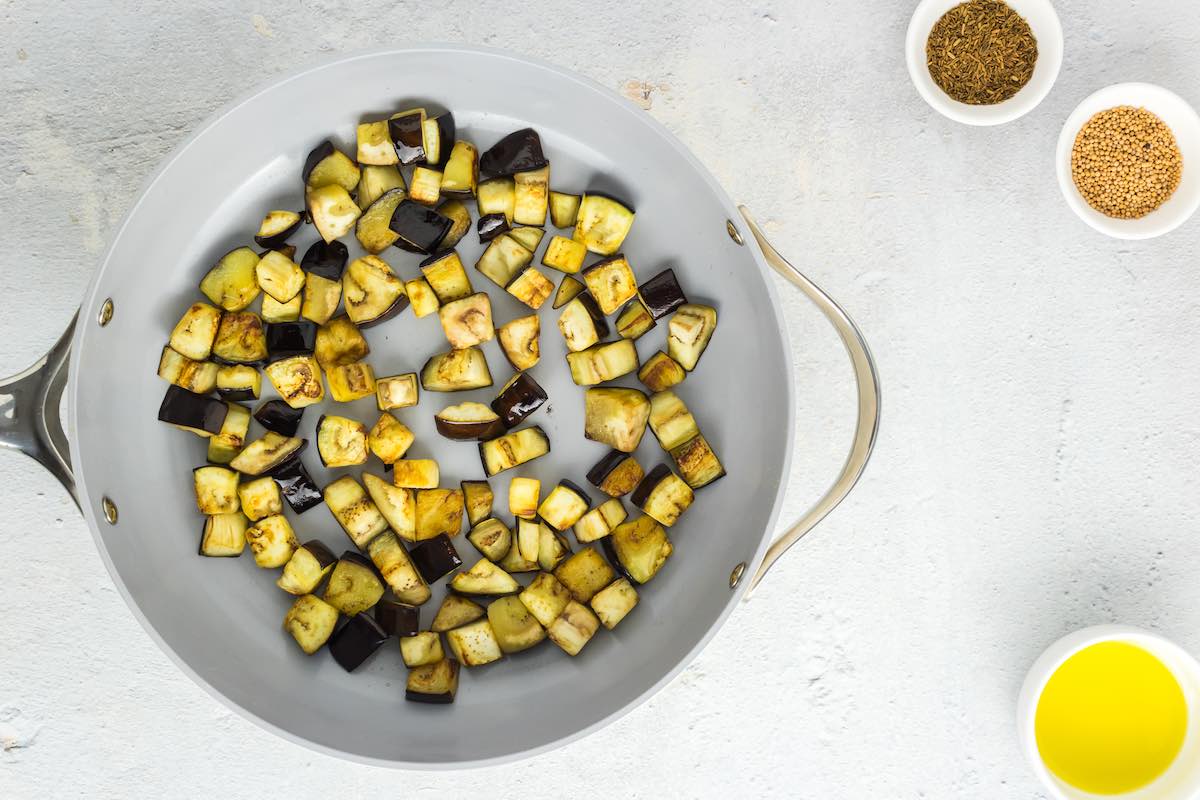
Step 1- Sauté eggplant. Heat 2 tablespoons of oil in a large pan over medium-high heat. Once hot, sauté the eggplant cubes for 7-8 minutes. Remove from the pan and set aside.
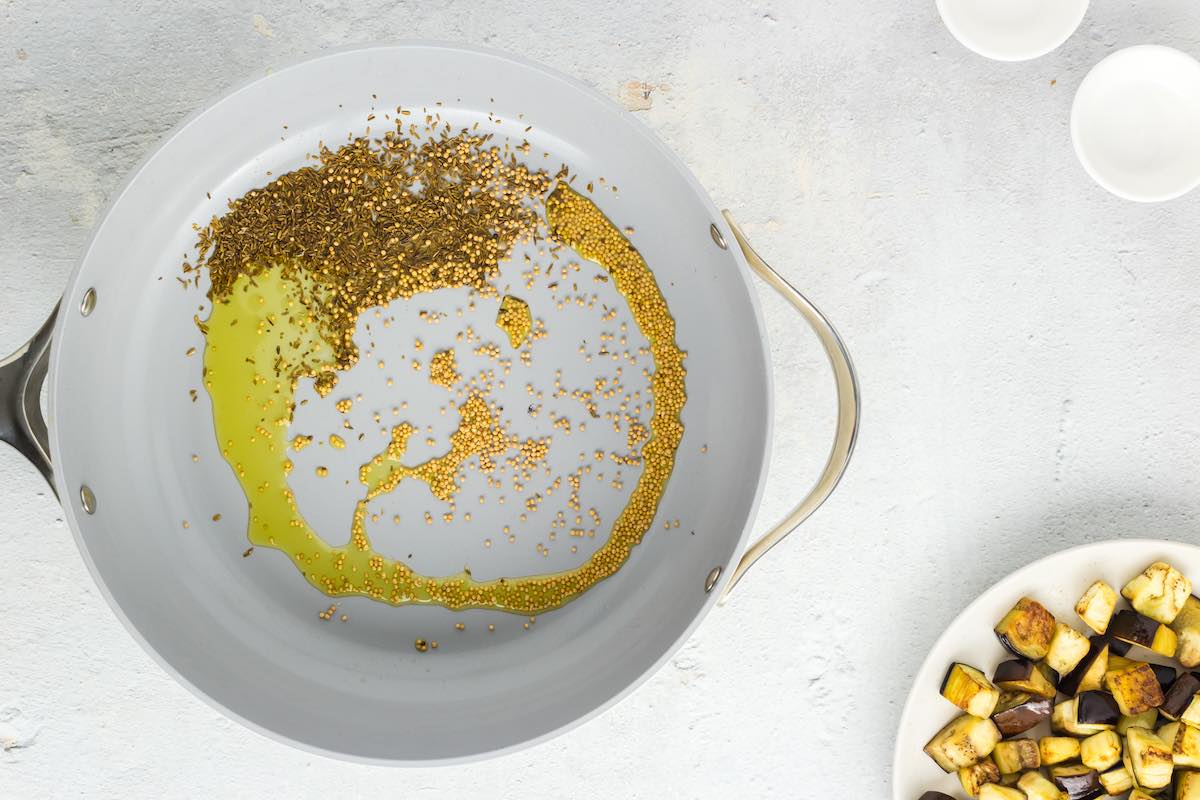
Step 2- Toast the seeds. Add the remaining oil and return to medium heat. Add the cumin and mustard seeds, cover the pan, and toast for 30 seconds.
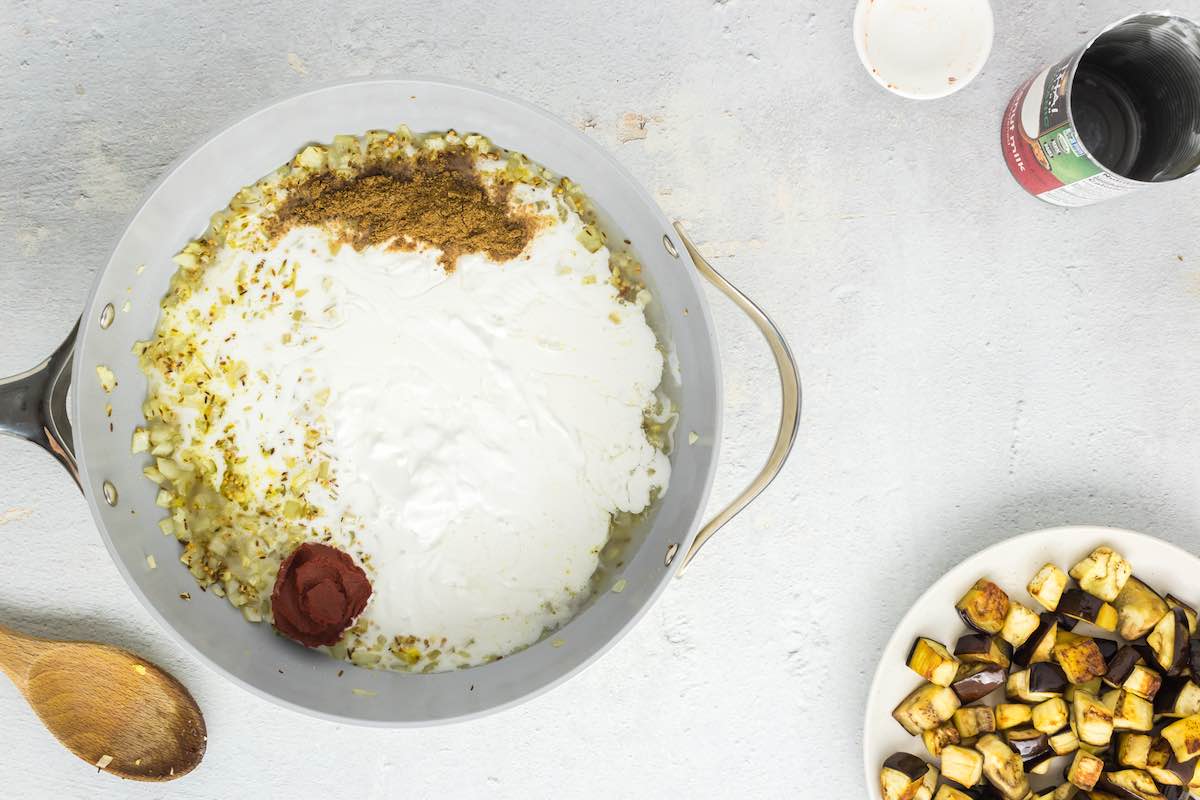
Step 3- Build the sauce. Add the ginger, garlic cloves, onion, salt, and pepper, and cook until fragrant. Stir in the garam masala, tomato paste, and coconut milk and bring to a boil.
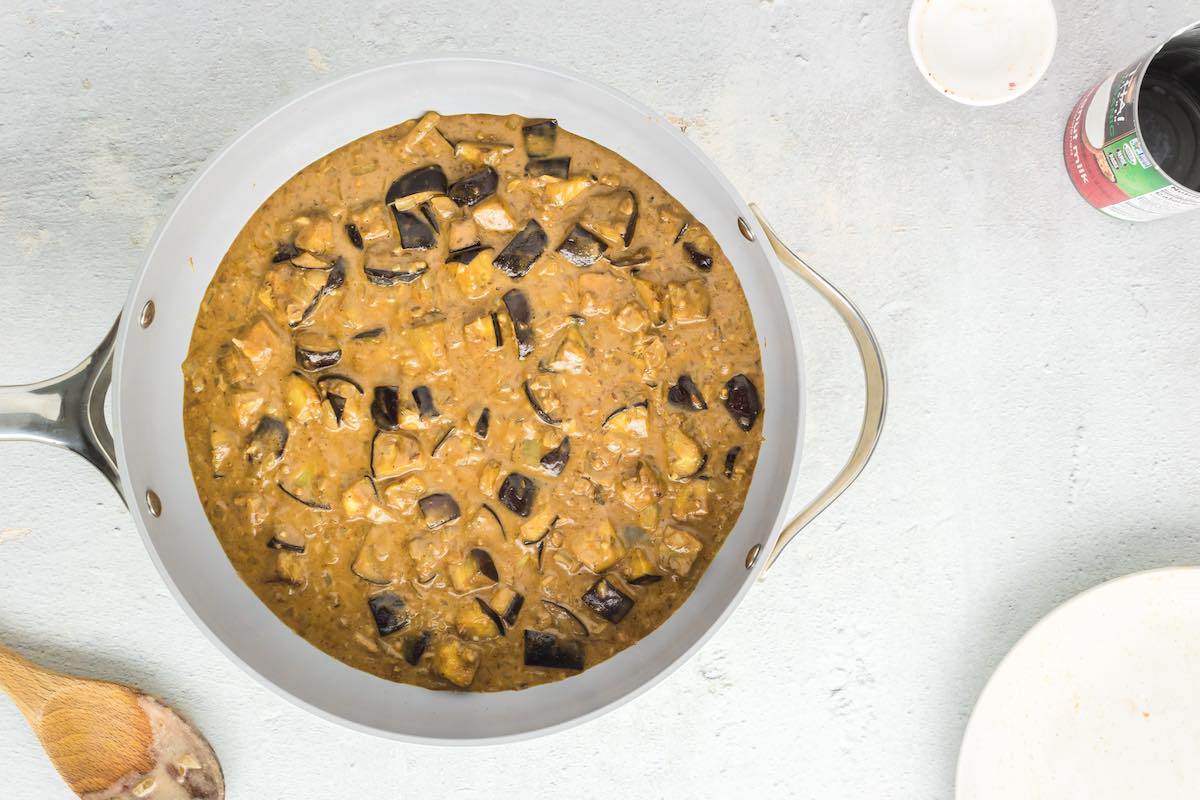
Step 4- Finish the curry. Add the eggplant to the pan and simmer until the sauce thickens.
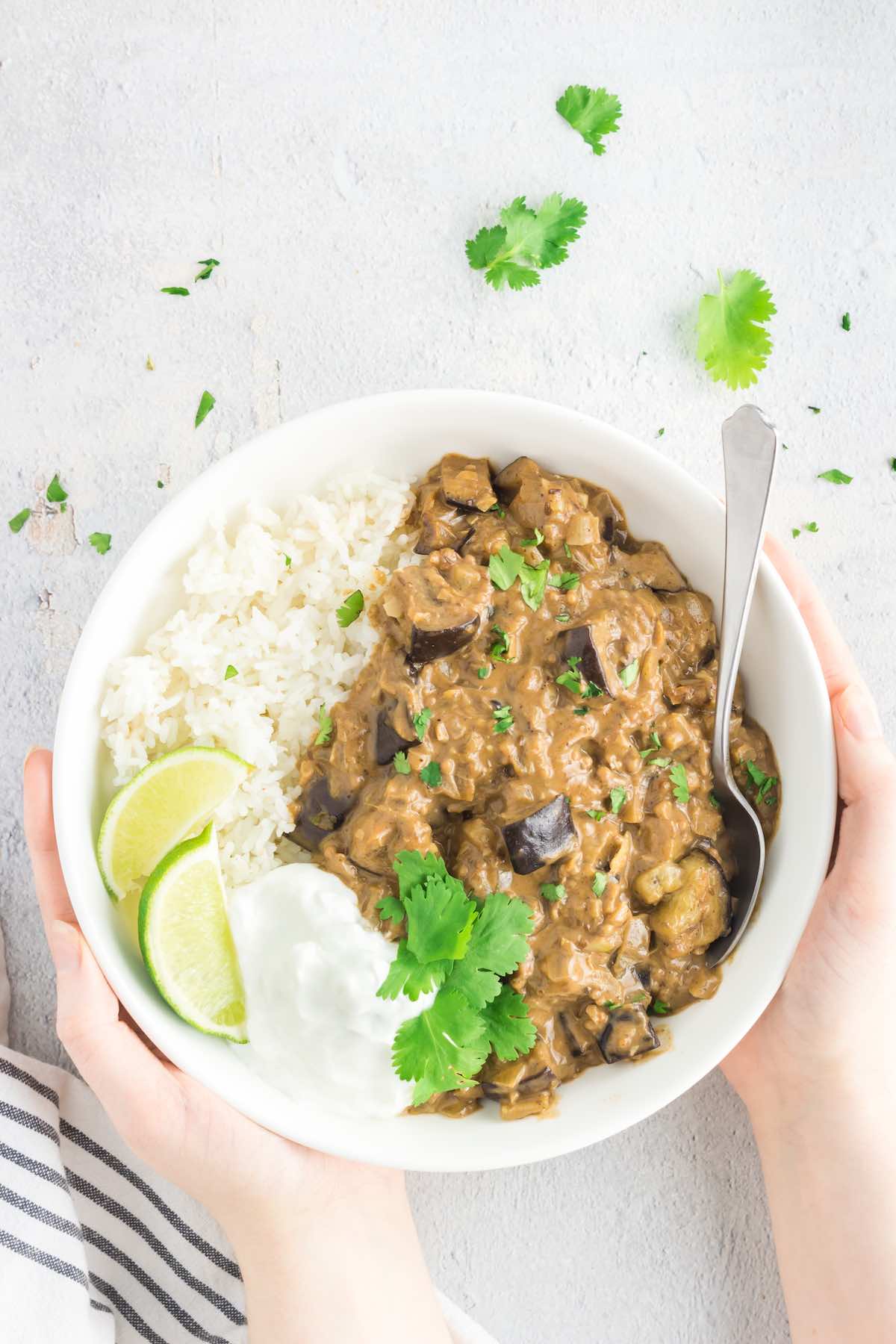
Step 5- Garnish and serve. Garnish with cilantro and serve with yogurt or extra coconut milk.
Arman’s recipe tips
- Cut the eggplant into large cubes. I recommend pieces around 1 1/2 inches wide since eggplant shrinks quite a bit as it cooks. The first time I cut them too small, they became too soft and didn’t absorb the curry sauce properly.
- Adjust the consistency as needed. If the curry becomes too thick, stir in a splash of extra coconut milk or cream. If it’s too thin, I make a quick cornstarch slurry using 1 tablespoon of cornstarch mixed with 3 tablespoons of cold water, then simmer the curry for another minute or two until thickened.
- Don’t overcrowd the pan. If your skillet is on the smaller side, saute the eggplant in batches. Too much eggplant in the pan causes it to steam rather than brown, making it far more likely to fall apart in the sauce.
Storing leftovers
Once cooled to room temperature, I transfer leftover curry to an airtight glass container and keep it in the fridge for up to 4 days. Or for longer storage, I’ll freeze it for about 6 months.
To serve, I thaw leftovers in the fridge overnight. Then, to reheat, I like to do it over the stovetop, as it will naturally separate the coconut milk from the eggplant. If it’s too thick, add a splash of water or milk.
Frequently asked questions
I tested this curry both with and without salting the eggplant first, and honestly, I didn’t find it necessary. Sautéing the eggplant properly cooks off most of the excess moisture on its own. That said, if you prefer salting it first, let it sit for 10-15 minutes, then pat it dry thoroughly before cooking.
I find chickpeas are the most natural addition since they don’t require any extra cooking- just drain and stir them in with the eggplant. I also recently tested the curry with paneer, which held its shape beautifully and absorbed the sauce really well. Just keep in mind the curry will no longer be dairy-free if you go that route.
More vegetarian curries
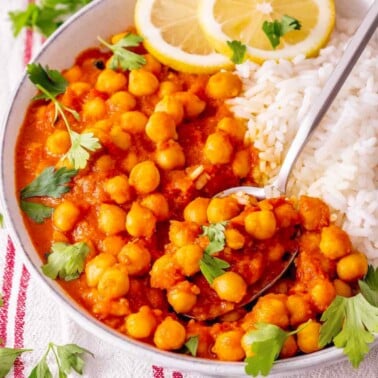
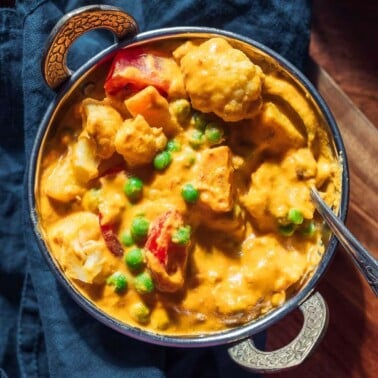
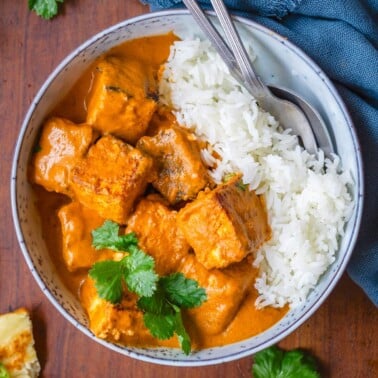
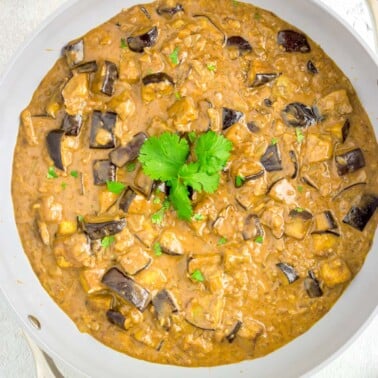
Eggplant Curry
Video
Ingredients
- 1 large eggplant cut into 1 1/2 to 2 inch cubes
- 3 tablespoons olive oil divided
- 2 teaspoons cumin seeds
- 1 tablespoon mustard seeds
- 1 inch ginger minced
- 3 cloves garlic minced
- 1 medium onion chopped
- 1 teaspoon salt
- 2 teaspoons garam marsala
- 1 tablespoon tomato paste
- 13.5 ounces canned coconut milk full-fat
Instructions
- Heat 2 tablespoons of oil in a large pan over medium-high heat. Once hot, add the eggplant cubes and sauté for 7-8 minutes, stirring regularly, until deeply golden around the edges and tender but still holding its shape. Remove from the pan and set aside.
- Add the remaining oil and place back over medium heat. Add the cumin and mustard seeds, cover the pan, and toast for 30 seconds, until fragrant.
- Add the ginger, garlic, onion, and salt, and cook until fragrant and the onion is translucent. Stir through the garam masala, tomato paste, and coconut milk and bring to a boil, about 6 minutes.
- Add the eggplant to the pan and simmer until the sauce becomes thick, glossy, and coats the eggplant. The eggplant should feel silky and tender without falling apart.
- Remove the curry from the heat, sprinkle with chopped cilantro, and serve with yogurt or extra coconut milk.
Notes
Nutrition
Originally published July 2023















I never ate curry before. Only spice curry. But I know its Indian food and I really much want to taste.
I received your email Mario- I’m thrilled you tried it out and added extra heat to it- I’m very impressed!
Looks yummy and I will make it
Please do- Let me know what you think!